

Holding the hillside
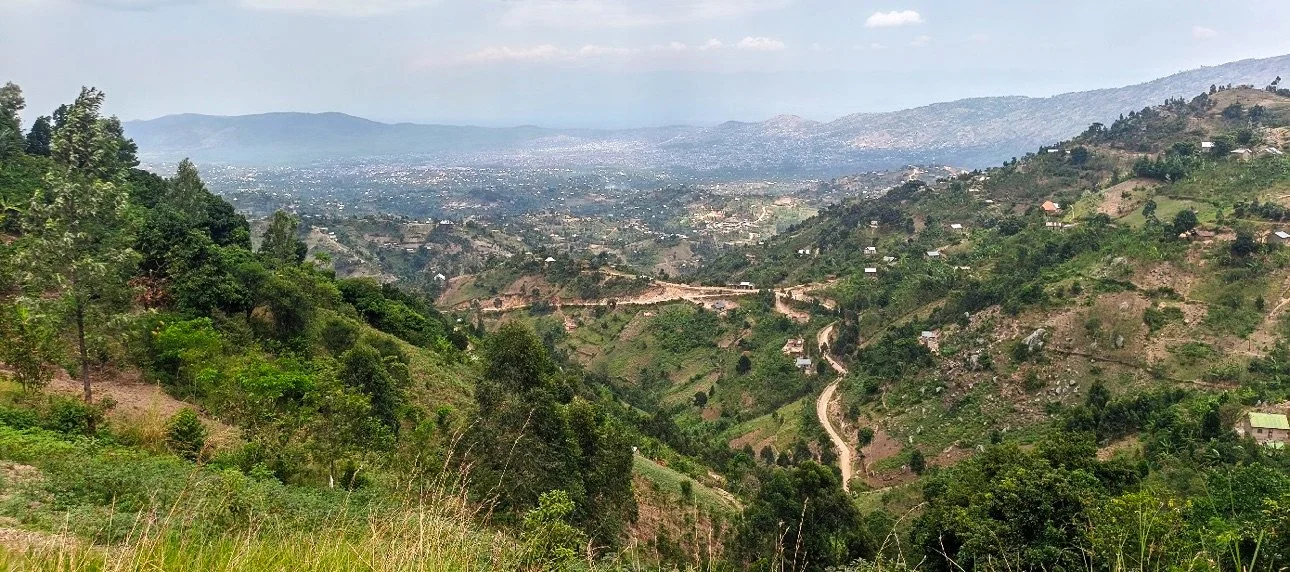
From the upper slopes of Ihandiro in western Uganda, in the foothills of the Rwenzori Mountains, the land falls away so steeply that you can clearly see the Congolese town of Kasindi across the border. The scenery around you is striking, but it’s also unforgiving for those trying to farm it.
When the rains come, the mountain moves. A baseline survey found that roughly two in three people had experienced mudslides, landslides or floods in the rainy season. As the Lhubiriha river breaks its banks and sweeps away farmland, the effects can be devastating for the 80% of local communities who depend on the income from farming.
For farmers with disabilities, many injured by landmines left from past conflicts near the border, these climate conditions are just one of several challenges. Markets for their produce are a distance away and there’s an obstacle course made by the hillside’s terrain, so it’s easy to see how a household slips into deep poverty and stays there.
Keeping the hillside in place takes three things: roots, reasons to protect them and the skills needed to do it.
Roots first
Over the last three years we’ve worked in Ihandiro with the Karambi Group of People with Disabilities, supported by funding from the States of Guernsey Overseas Aid & Development Commission. Our aim was to support farmers with disabilities in growing more and increasing their incomes, while healing the land that was failing them.
That began with adding 36,812 native and agroforestry trees to the most vulnerable places. Along the river and across neighbouring sites we then planted more than 30,000 bamboo, alongside a tough fodder grass called Setaria anceps.
Bamboo’s dense underground stems grip soil like a net. Each plant can send up around ten more new shoots from its roots, so the riverbank needs less replanting. One of the most susceptible spots along the river, rehabilitated with bamboo, has held firm for two years, even as the water rose, meanwhile the Setaria planted in strips is slowing erosion like a series of speed bumps for rainwater.
More reasons to keep the trees
Yet these roots will only hold if they stay in the ground, protected by local people, so as the trees bear fruit, local communities have another clear motivation to safeguard them. Mango, jackfruit and guava trees only three years old are already feeding families (one jackfruit tree can bear up to 50 fruits), while income from coffee and cocoa production is helping to buy livestock and pay school fees. One farmer, Muhindo Paddy, was supported in planting 100 cocoa and 200 coffee seedlings, with many plants already producing berries and pods.
We’ve provided 500 efficient cookstoves, 129 of them having been installed in households with a disabled family member, adding trees on farm boundaries to help supply the fuel. 214 kitchen gardens now grow tomatoes, cucumbers and chillies alongside indigenous vegetables; these crops need less water, better suiting people with limited mobility, with 78 farmers with disabilities also receiving rainwater tanks to supply them.
Skills that stay
Providing trees and equipment is important work, but even more crucial to the long-term health of the land is working with local people to develop the skills they need to care for it. Much of this knowledge is shared through the Karambi Permaculture Centre, a training hub in Ihandiro. 128 young people have learnt a trade here, many of whom live with disabilities, developing skills in welding, tailoring, carpentry and sustainable agriculture.
Some of the new welders now build affordable wheelchairs for people who could not otherwise buy one. Patience, a social work student on placement from Uganda Pentecostal University, was inspired by her mother – who lives with a physical disability and has a kitchen garden of her own – to plant an organic garden of indigenous vegetables for her course project.
The project has also run training for farmers in climate-smart agriculture, agroforestry and permaculture – designing a farm to work like a natural ecosystem, so nothing goes to waste. Water from fishponds is reused to raise tree seedlings and water the gardens, while farm waste feeds the harmless Hermetia illucens flies which in turn provide food for poultry and fish – with 6,000 fish having been harvested and sold to date.
The Centre now runs two-week permaculture design courses, with groups from Kenya and Tanzania already confirming places, paying fees that are reinvested to help keep it running.
And it’s not just new skills that are growing here, but new outlooks. Binyinyi Tereza trained in sustainable farming at the centre and started her own garden, “Not only have I improved my access to nutritious food,” she says, “but my self-esteem has also soared.” The mayor of Ihandiro Town Council even credits youth training with a fall in crime involving young people in Karambi town.
Built to last
The Centre is also home to the Karambi tree nursery, where seedlings are raised before being planted out. With the project’s support, the community has expanded it to grow bamboo, coffee, cocoa, fruit and agroforestry trees, better meeting the high demand across a region with a great deal of bare land. The nursery at the Centre, along with two satellite nurseries, sells seedlings at affordable prices – Ihandiro’s agricultural officer reports that every southern silky oak (Grevillea robusta) under three years old in the sub-county can be traced back to it.
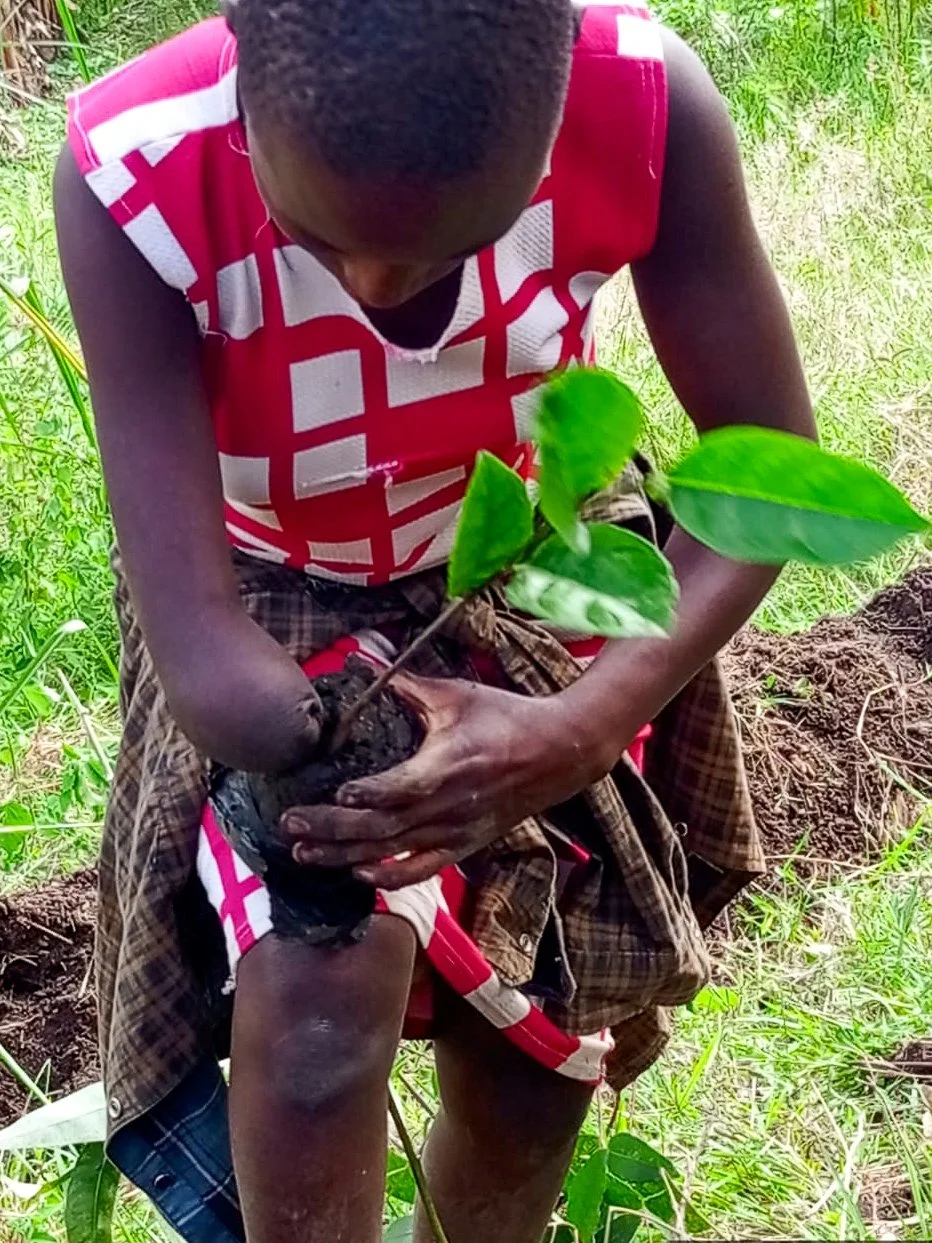
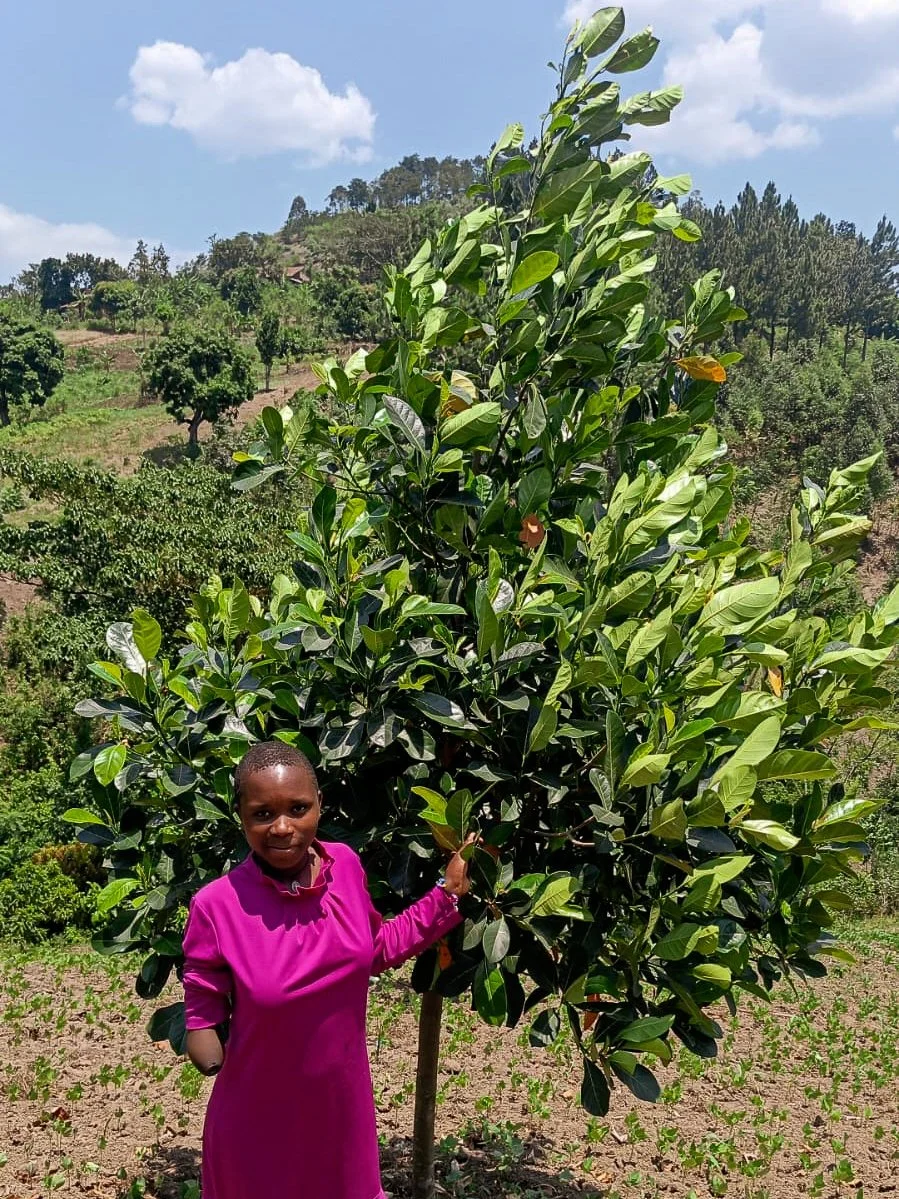
Constance Biira planting her tree in 2024 and standing next to it in 2026
In May 2024, Constance Biira planted a jackfruit seedling on one of Ihandiro’s slopes – just two years later, the team and I met her beside a healthy tree. That’s what holding the hillside looks like: roots and people given the time and support they need.
Donate today
The power of trees is real, all we need is your help to plant them. Please donate £2 today.