
Last week, I visited Ihandiro Sub-County, Kasese District, Western Uganda, where we are working in partnership with Karambi Group of People with Disabilities (KAGPWD).
Our project, which started in 2023, exists to enhance food security and improve livelihoods for people living with disabilities. Together with KAGPWD, we are restoring degraded landscapes, establishing livelihood improvement initiatives and equipping people with vocational skills so that they can become economically self-reliant.
One of a kind training hub
The project also included establishing a permaculture centre to provide training opportunities to the community on sustainable land management, nursery establishment and management, food forests, kitchen gardening, organic farming and fish farming.
During my visit to document the project’s impact, I surveyed different restoration sites, including riverine areas, community farms and households, and talked with local people.

Constance with the jackfruit tree she planted 2 years ago
My first stop was at the Karambi Permaculture Centre, a training hub and the only one of its kind in the entire sub-county. This unique institution is run entirely by people living with disabilities. The centre integrates indigenous tree growing, food forests, beekeeping, fish farming and organic farming. Everything in one section of this centre is recycled in another. It also offers training to the community and other institutions.
One outstanding achievement of the centre is the establishment of a food forest. This is a forest with fruit trees and climbers including avocados, guavas, papaws, rose apples, mangoes, jackfruits, citrus and passion fruits. Among the trees stands a healthy jackfruit tree planted by Constance two years ago that has now outgrown her and is about to start producing fruit.
One of the beneficiaries of the centre is Hellen Vumilia, a teacher at Mukunyu Primary School, where she works with children with special needs. She attended the centre to learn practical skills, such as establishing kitchen gardens, which she is now teaching to her students.
Food forest
As we walked along the village roads to visit community farms, I learnt that every grevillea tree growing along the roads is thanks to the project. Community members have planted the seedlings they received along the boundaries of their farms.
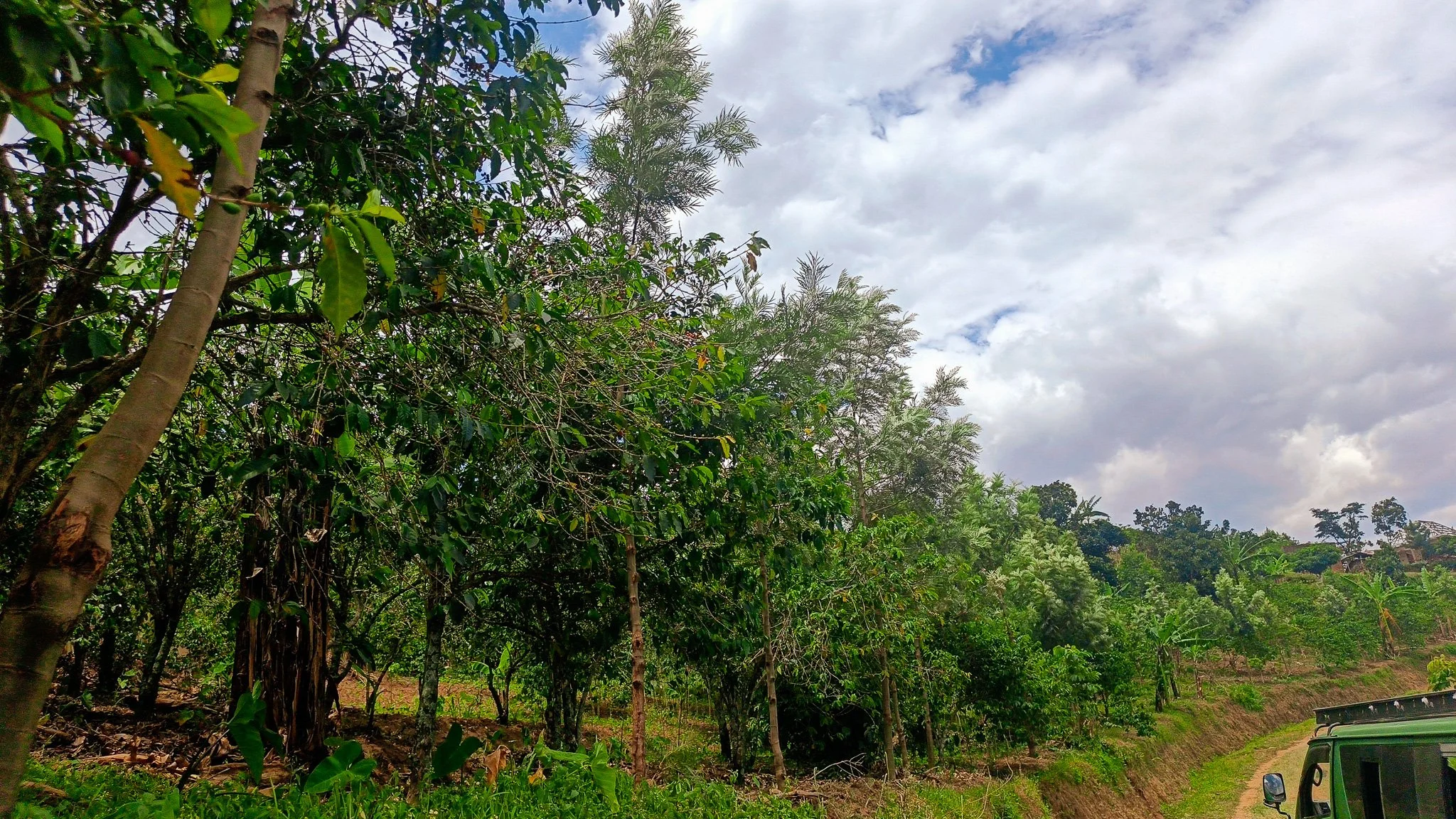
Grevillea tree growing along the roads
Paddy Muhindo was one of the earliest adopters of the project’s initiatives. Being the local chairperson at the time, he was greatly involved in ensuring the community embraced the project. He decided to lead by example by practising what the community was being taught. His one-acre plot of land stands out among the rest in the community. He replicated the food forest from the Permaculture Centre on his farm, where he planted jackfruits, oranges, pawpaws, avocados and guavas. The food forest is now four years old and he is enjoying fresh fruit, fodder for his livestock and shade for his coffee trees, while also providing food and nesting places for the many birds visiting his farm.
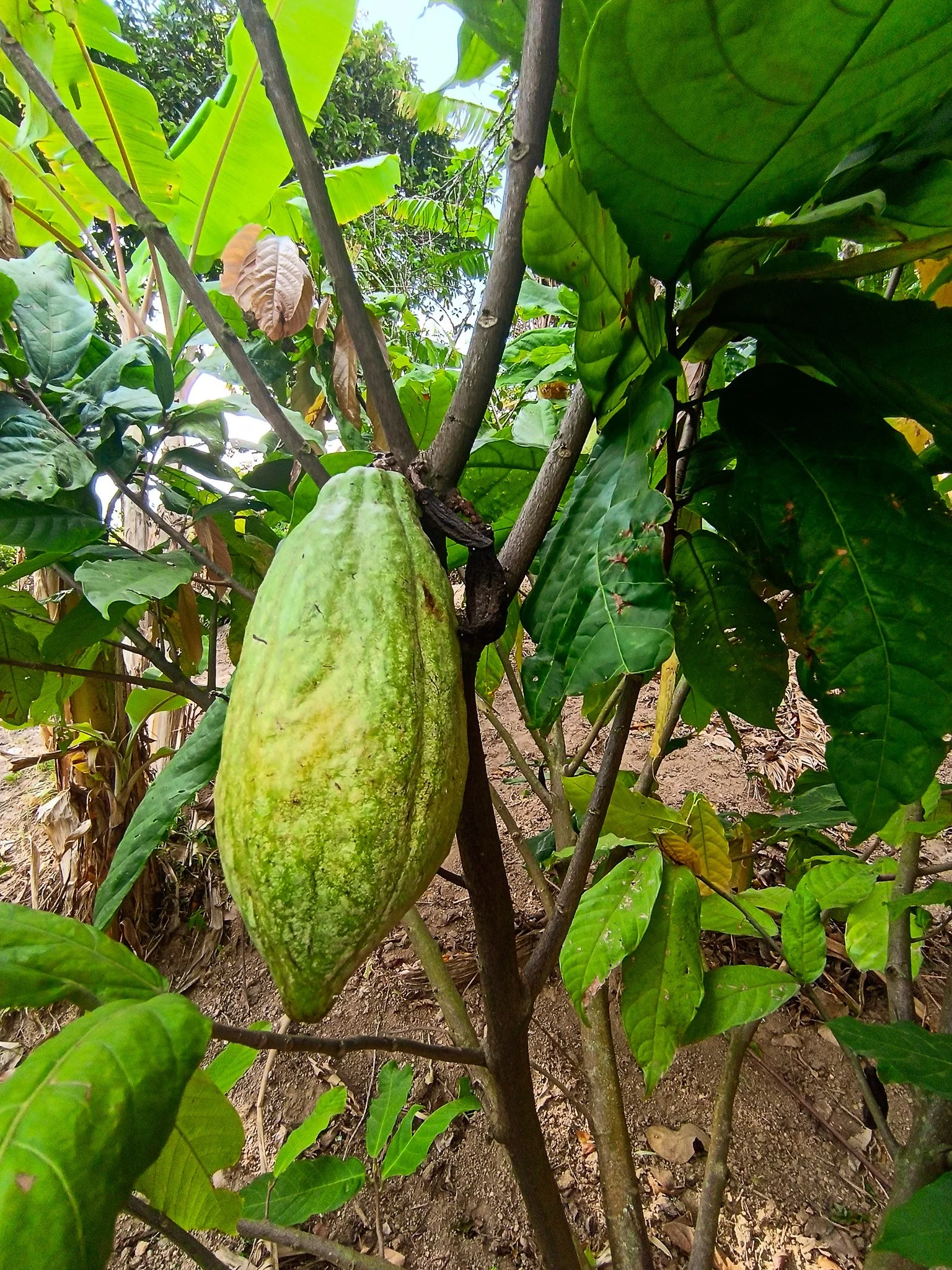
Cocoa tree producing pods, two years after planting
He also planted cocoa and high-value coffee trees that provide a sustainable income to pay school fees for his two children who are at university, as well as his younger children who are in primary and secondary school. With the proceeds from coffee, he bought a pig. Today, Paddy has eight pigs and over 20 piglets.
My visit to beneficiaries enabled me to document the social impacts of the project. For Joan Biira, like all the target farmers, her two-year-old woodlot is now providing her with a sustainable source of firewood through pruning branches. All 150 trees she planted have grown into a mini forest. The trees are also protecting her land, which sits on very steep terrain. Her water harvesting tank is of great help, since she can access clean water easily despite her old age.
Planting bamboo
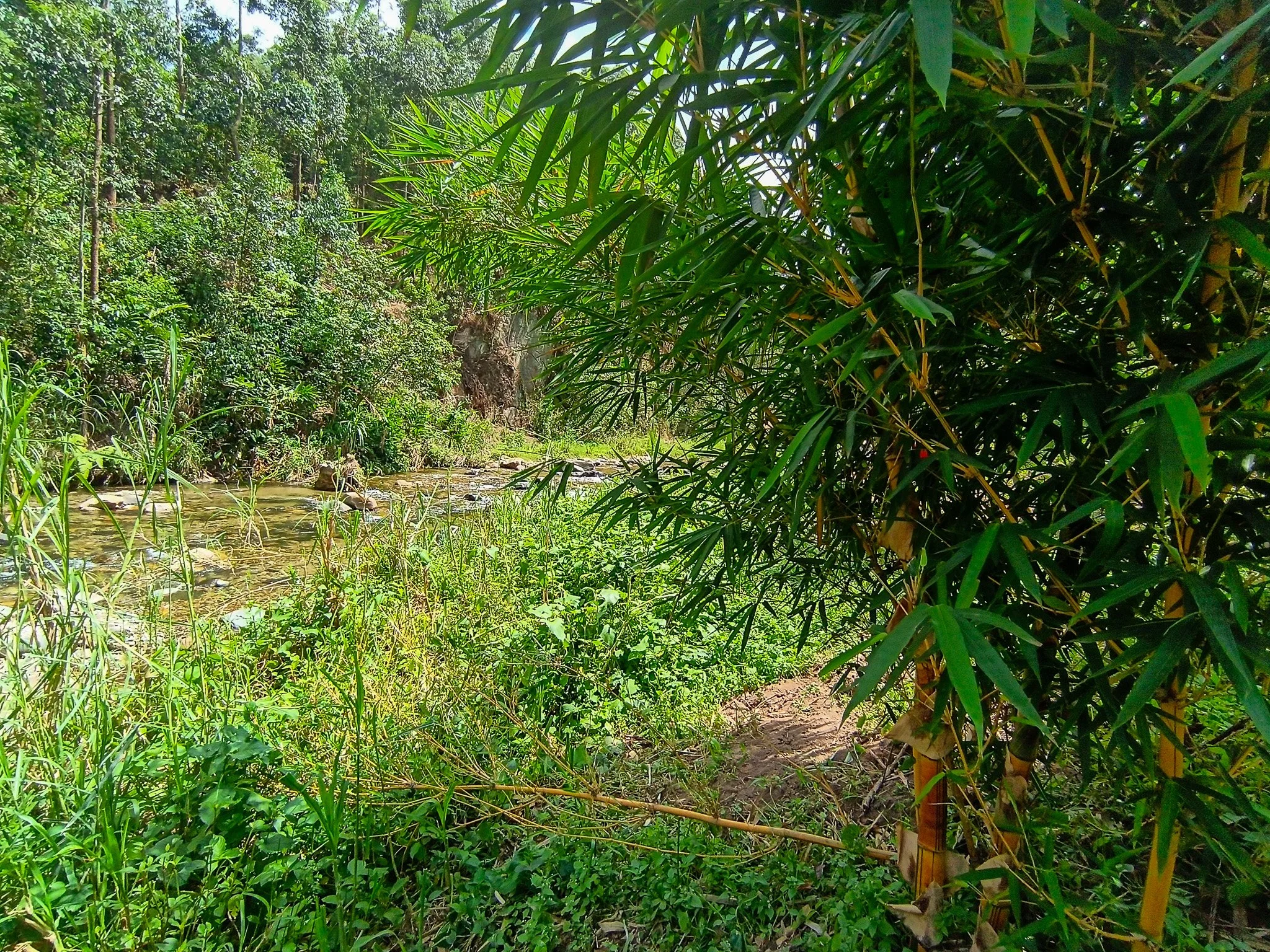
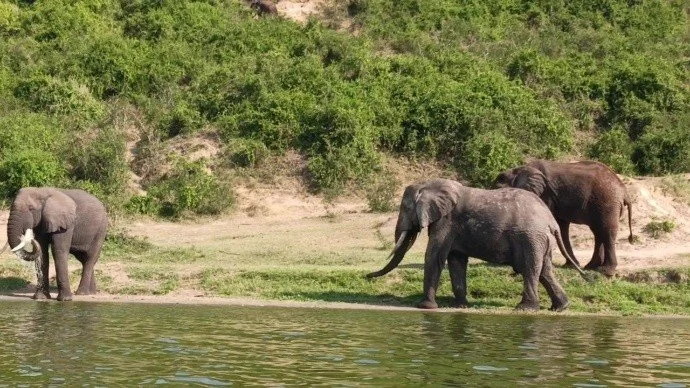
River Lhubiriha, a tributary of River Tako, is a critical resource. It feeds into Lake George and Lake Edward in Queen Elizabeth National Park, an important ecosystem that supports rich biodiversity, including elephants, Cape buffaloes, hippos, crocodiles, birds and fish. For many years, River Lhubiriha has broken its banks, destroying adjacent farmland and posing a threat to residents. Rampant soil erosion causes siltation in Lake George. The project identified one of the most affected areas and planted bamboo. In the last two years, this vulnerable part of the river has remained stable despite increased river flooding. The bamboo is also providing firewood to farmers on whose land the bamboo was planted.
It was very satisfying to witness how locally led initiatives have transformed community lives, especially the lives of those living with physical disabilities, as well as improved landscapes across Ihandiro Sub-County and Kasese District. While a lot has been achieved, there is still a need for more support to scale up the best practices and lessons learnt to other areas not currently reached.
Plant more trees
You can help projects like this grow with a donation today.