
Threatened trees within threatened landscapes
With sincere thanks to so many of you, we reached our Big Give target. Your support is already at work, helping to recover threatened tree species in the places where it matters most.
The need is urgent. According to Botanic Gardens Conservation International and its State of the World’s Trees report, around 30% of the world’s tree species are threatened with extinction. That is a stark figure. It reflects what we see on the ground: forests under pressure and the risk of species quietly disappearing.
Our work focuses on the practical action needed to bring species back.
In April, I visited some of those threatened landscapes in the highlands of Kenya. Here, communities are restoring degraded forest and bringing threatened species back into the landscape. Around 10% of Kenya’s native trees face extinction. Without sustained effort, many will be lost.
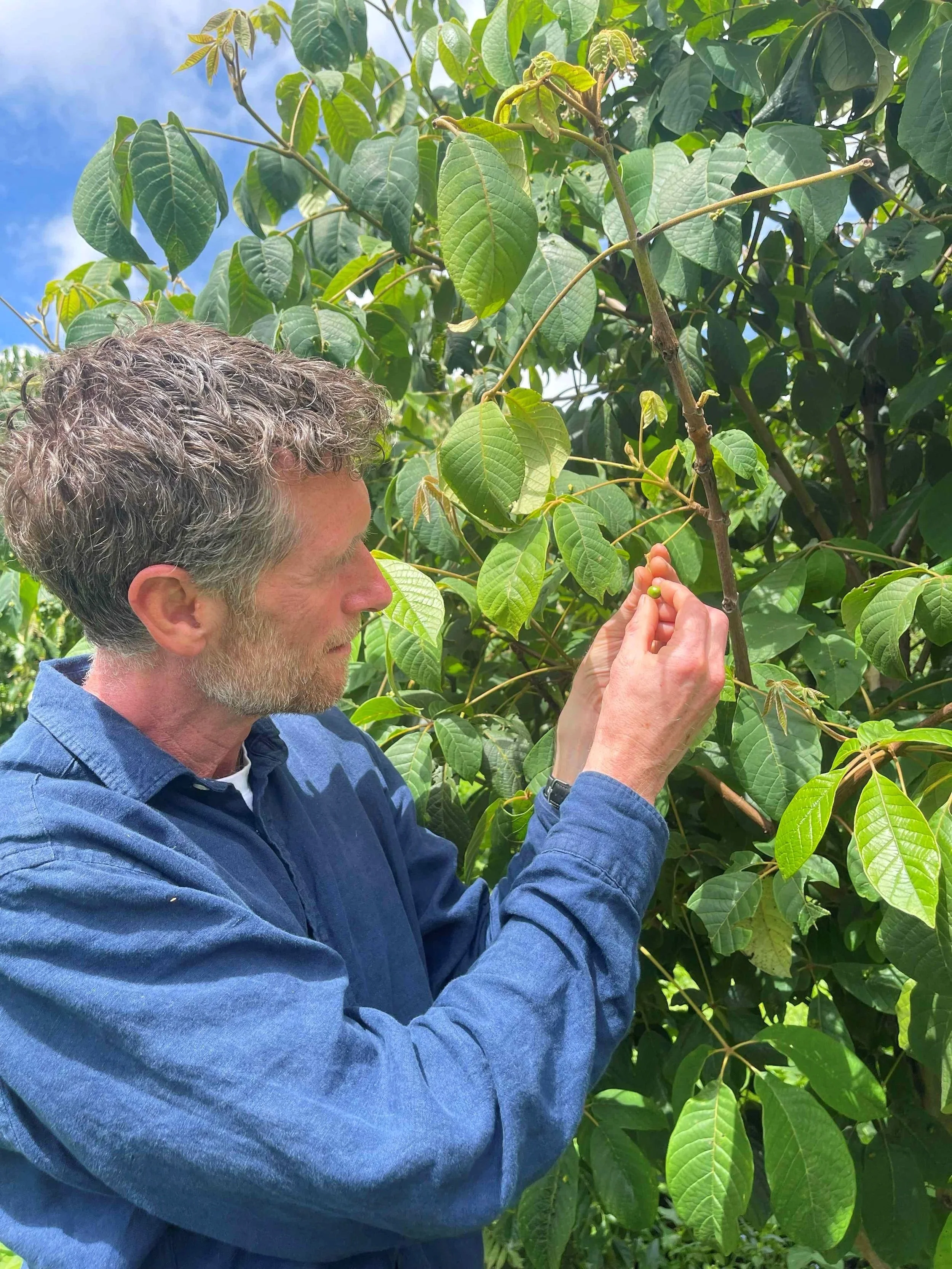
Meru Oak, Vitex keniensis, threatened and endemic to Kenya’s Afromontane landscapes
One example is the Meru oak (Vitex keniensis). It is a valuable hardwood, but also plays an important role in the wider ecosystem. Its flowers support bees and other pollinators. It provides a habitat for birds and other wildlife. When grown on farms, it provides a source of durable, termite-resistant timber that reduces pressure on natural forest.
Our approach is rooted in communities – that is the most sustainable way of creating lasting change.
Local seed collectors are trained to identify and monitor “mother trees”. Seeds are carefully propagated in community nurseries, then planted in forests and on farms, with long-term support to ensure they survive and thrive.
This is steady, deliberate work. It takes time. And it works. In partnership with communities, and with you, this is how threatened landscapes are restored and how threatened species are brought back from the brink.
Donate today
You can help create lasting and sustainable change for tree, landscapes and the communities that depend on them