

Growing tomorrow’s forest from today’s schoolyard
The Rwenzori Mountains rise steeply from Kasese District in western Uganda, with their peaks garlanded by clouds for most of the year. People revere these ‘Mountains of the Moon’, but the UNESCO World Heritage Site is now as fragile as it is ancient and beautiful.
Climate change, deforestation, encroachment, unsustainable farming and mining have made floods, landslides and prolonged droughts a lived reality across this region. In 2020 alone, floods and landslides destroyed 32 classrooms and 12 washrooms in Kasese District's schools, interrupting learning for months and leaving communities displaced.
For many families here, the response to that insecurity was to cut down trees for firewood and income – really for survival in the short term. It’s an understandable choice, but it makes their already difficult situation worse. Tree cover declines, slopes become more vulnerable and future disasters intensify.
And children, who bear the least responsibility for any of this, often end up bearing many of the consequences.
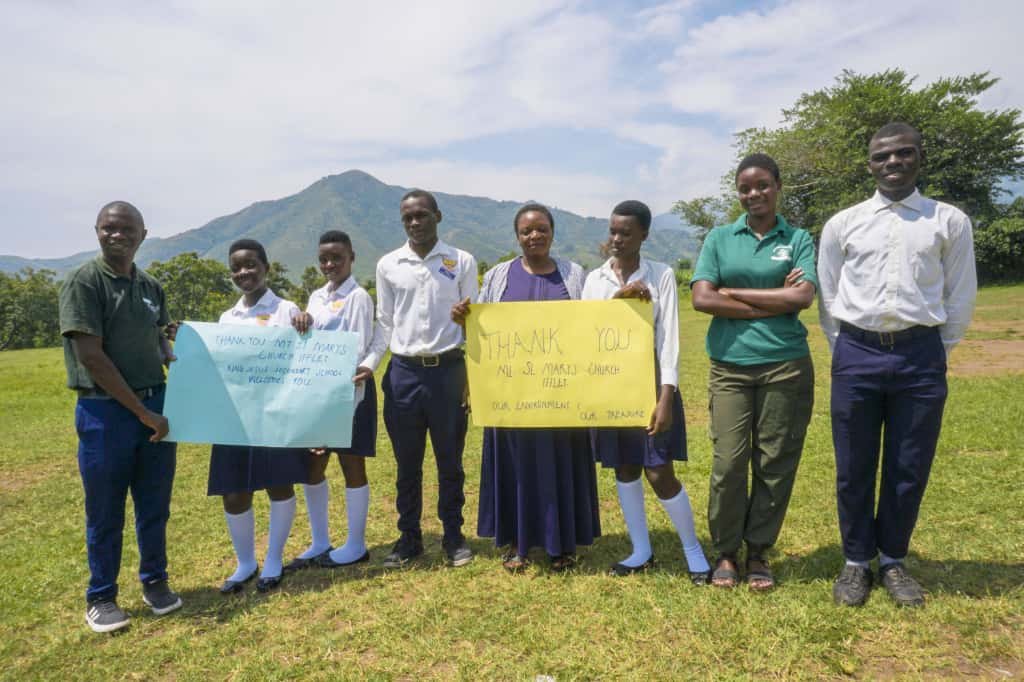
ITF has been working in the Rwenzori region since 2015, joining with local organisations to help restore these landscapes. Over the last few months, in partnership with local group the Front for Climate Change (FCC) and with generous support from the congregation of St Mary's Iffley Church in Oxfordshire, England, we launched a project to take that work directly into six schools.
King Jesus College, a secondary school at the heart of the programme, sits on 16 hectares of flat land around Mubuku Town Council and is home to around 420 students. Until recently it had very little tree cover, but that’s changing. Earlier this year, 550 trees went into the ground there: mangoes, jackfruit, avocado, terminalia, grevillea, musizi and more – species chosen for the site, the soil and for what they can give back to the community around them. Our early monitoring shows a 95% survival rate; a good sign that the right trees are in the right places and being tended by the right people.
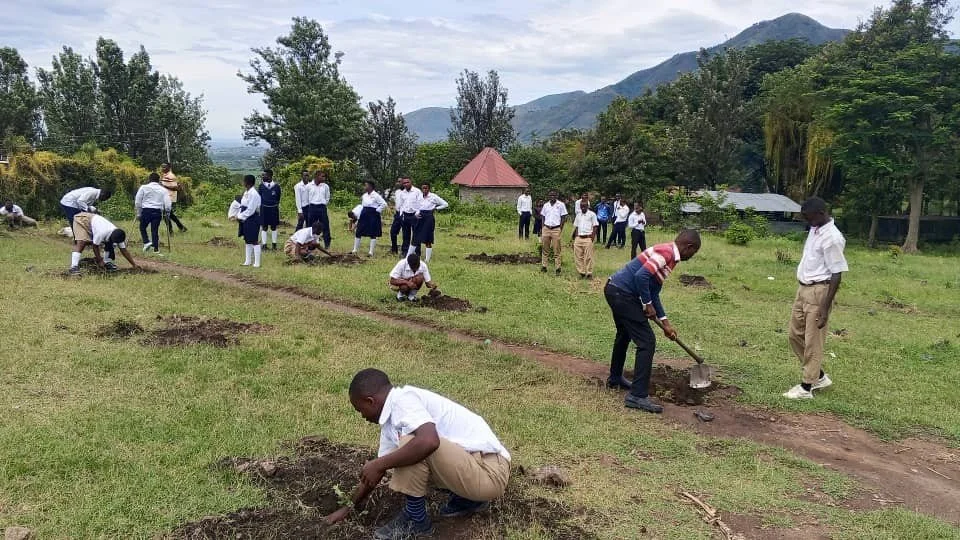
Those people are, above all, the students themselves – especially the thirty who have joined King Jesus College’s new Environment Club. Alongside tree monitoring, the club’s other focus is to run the nursery that the project has established, producing seedlings not just for the school compound but for its surrounding community.
When I met Madam Gloria, the school’s Geography teacher, she said that her “students are proud that the trees they plant today will serve the children of tomorrow.”
This really stayed with me on my journey home. It ties into something I’ve always thought, that planting a tree asks you to invest in a future you may not live to see. Through hands-on training in nursery management, planting techniques and tree maintenance, the students at King Jesus College are learning to make that investment. They’re also building the practical knowledge their community will need to face a changing climate for generations to come.
The other schools in the programme each experience their own challenges. Muramba Valley C.O.U. Primary School borders the Nyakalhoke stream, which has long provided water to the community but has also brought flooding that damages crops and property nearby. At Jordan Model Primary School, steep terrain leaves the grounds vulnerable to erosion and landslides, and bamboo is being planted along the banks of the Nyabyeya River to stabilise them. At each school the approach is the same: involve and train students, establish a nursery that’s run by a passionate environment club, then create the conditions for trees and learning to take root.
An Oxfordshire parish church and a secondary school in western Uganda may seem an unlikely pairing, but he Mountains of the Moon have stood for millennia and with the support of people like the congregation of St Mary's Iffley, the forests that once covered their slopes can grow for centuries more.