

Planting roots in Sussex
When 170 students walked out of classrooms at Chailey School this year, they were heading to plant trees that they’ll watch grow for the rest of their time there.
These aspiring conservationists from Year Eight weren’t working alone, but as part of a wider programme of community tree planting across Sussex, made possible by a grant from the Ernest Kleinwort Charitable Trust. This independent family trust, dedicated to supporting wildlife conservation across the county, have backed projects at Lovebrook, Littlehampton and Telscombe Tye, alongside the project in the school.
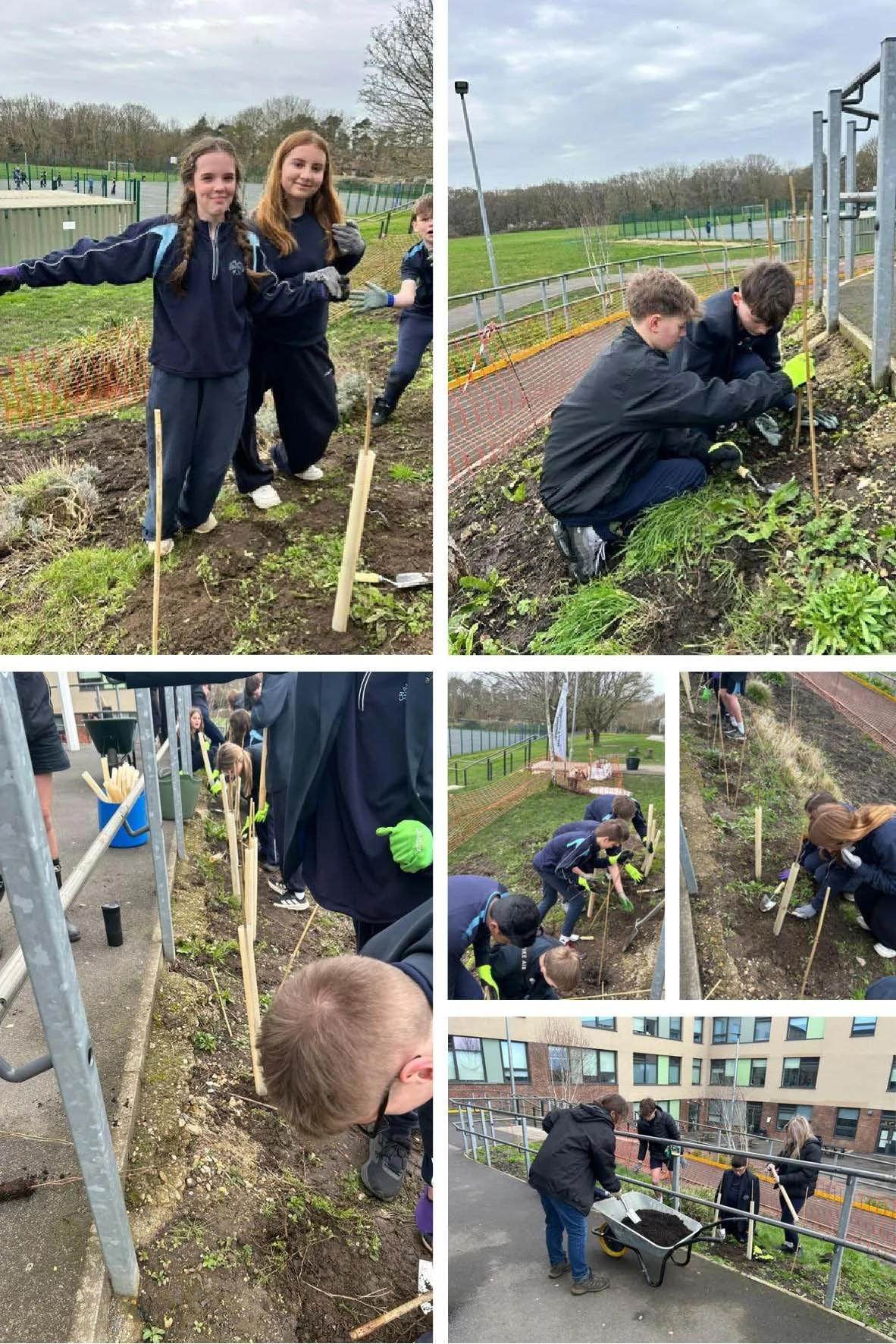
At Chailey, our involvement began well before planting day. We studied the site to help select the right species for the right places – assessing soil conditions, available space and the goals for each planting area – avoiding the common issues behind young trees failing to establish.
Before the students got anywhere near a spade, they took part in ITF-led discussions about why trees matter and what the native species they’d be working with could provide for wildlife, as well as how to spot different trees, plant them correctly and care for them over the long term. Understanding why you’re planting something and what it needs to survive, can change the relationship you have with the nature around you.
The project also gave us a chance to trial biodegradable tree guards, protecting young stems in their early years from animals like rabbits and deer, as well as from other environmental factors like strong winds. Biodegradable guards offer the same protection as their traditional plastic equivalents. Testing them during the project was a small step towards our broader aims for responsible planting.
Although biodegradable tree guards are more expensive than traditional plastic alternatives, it was important for students to see that environmentally friendly options are available. These guards will naturally break down over time, reducing plastic waste and avoiding long-term harm to the environment. And they demonstrate how sustainable choices can make a real difference.
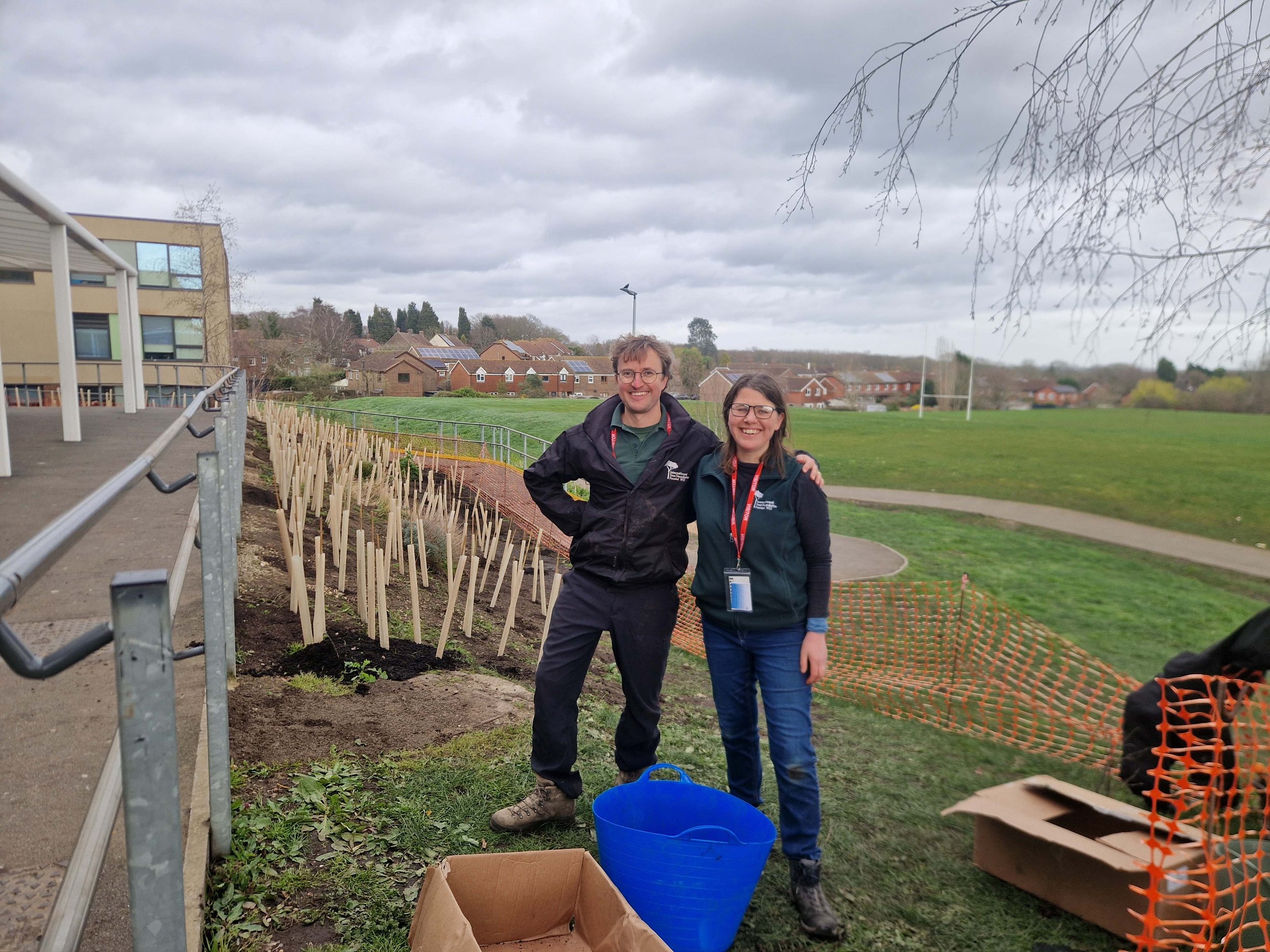
Across the rest of the Sussex programme, we’re helping to create greener spaces, richer habitats and opportunities for people of all ages to connect with nature. At Lovebrook in the South Downs National Park, families and young children have joined volunteers to plant trees together. In Littlehampton, volunteers are focussed on looking after species-rich hedgerows, slower to establish than a single tree, but enormously valuable for insects, birds and small mammals. On the open downland of Telscombe Tye, more challenging coastal conditions meant we had to develop a planting plan to select species that could withstand exposed conditions - clifftop winds, shifting soils and salt spray. To accompany the planting, we’ve also produced free guides on tree planting and aftercare to help each community look after their trees for years to come.
Back at Chailey School, the students’ involvement doesn’t end with planting either. They’ll now help to care for the saplings as they grow and many will still be studying when those trees become well-established. Remembering the day they put them in the ground, each student will hopefully be able to experience the benefits tree planting brings, including the sense of ownership and responsibility you can get from it.
We’re hugely grateful to the Ernest Kleinwort Charitable Trust for making work like this possible. As one Chailey teacher said, this is just one example of a “very worthwhile project which involved a whole year group in our work to enhance our school site with biodiversity.”
If your school or community group is interested in tree planting support, ITF runs a Community Tree Planting Grant Programme which might be able to help. Find out more on this UK Grants page or get in touch, we’d love to hear from you.
Donate now
You can help grow the next generation of environmental stewards with a donation today.