
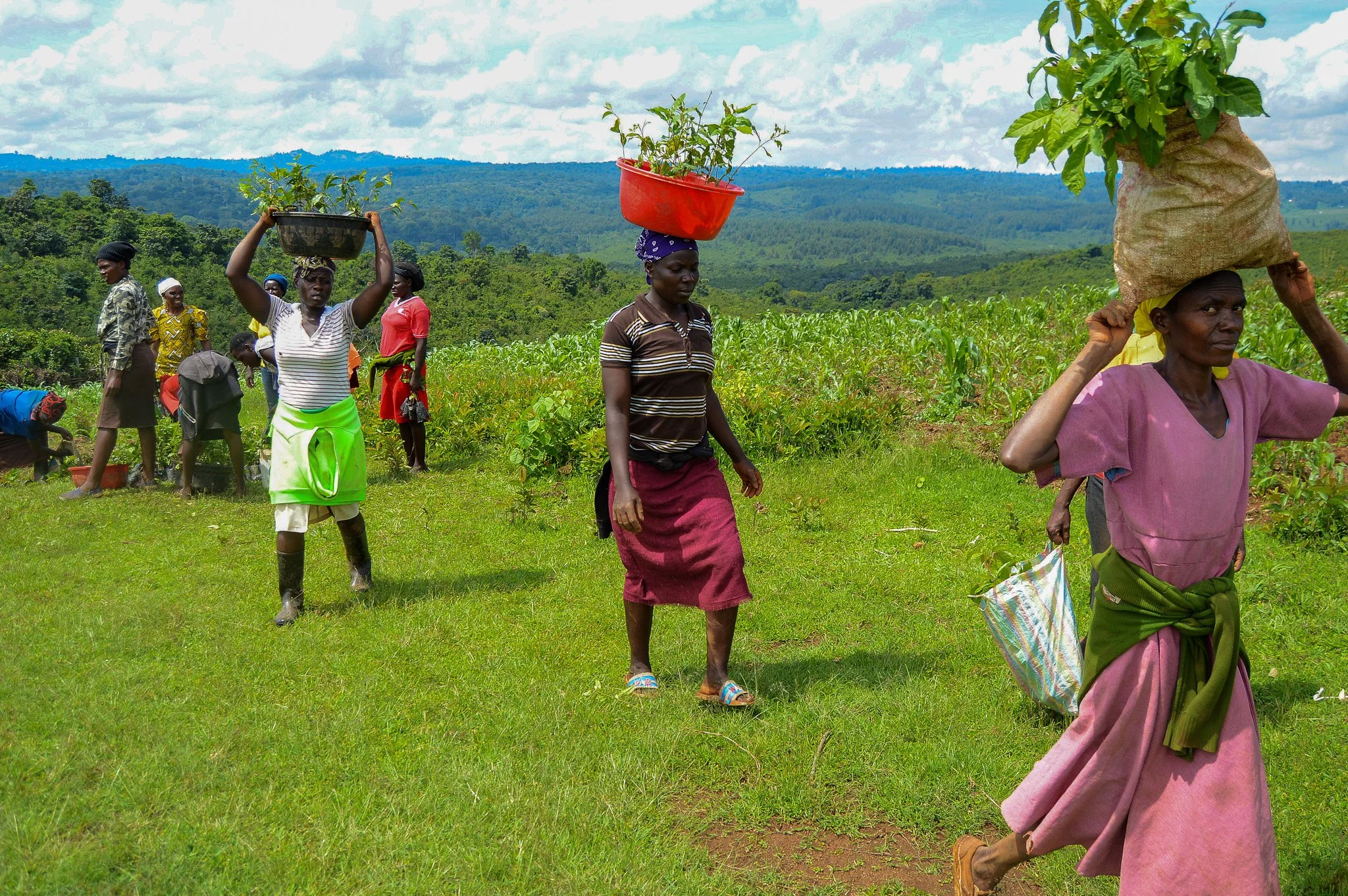
Following the large-scale planting campaigns of 2024 in Kenya, we’ve focused on intensified monitoring, reporting and verification. Our efforts shifted toward evaluating outcomes, maintaining planted trees to enhance survival rates and assessing long-term impacts. Through targeted maintenance including spot weeding and replanting lost trees we achieved an average seedling survival rate of 80% across landscapes.
The positive outcomes are now tangible and measurable. Forest regeneration: Canopies are forming just four years after planting in Dundori Forest. Water resources: Rivers in Irangi Forest have been recharged, increasing water supply for local communities. Biodiversity resurgence: Birdsong and insect activity have intensified, elephant populations in Meru Forest are rising and small animals such as dik-diks, antelopes, hares and worms are thriving in Ndaragwa Forest.
These indicators demonstrate a clear revival of biodiversity across restored ecosystems.

Climate challenges
Despite these successes, some regions experienced extreme heat and high temperatures linked to climate change. Forest fires occurred in Bahati and Ndaragwa Forests but were swiftly contained. In collaboration with local communities, the Kenya Forest Service (KFS), and ITF staff, we investigated the causes and developed strategies to prevent recurrence.
The proactive engagement of communities through rapid reporting, problem solving and active participation underscores their commitment and ownership of restoration efforts. Their involvement reaffirms our belief that local communities are central to successful restoration. Their voices, traditional knowledge and lived experiences are invaluable and must never be underestimated.
Social and economic impact
In Meru, the Community Forest Association demonstrated the broader benefits of restoration projects. With pride and gratitude, members committed to supporting the less privileged in their community. From a bumper harvest of beans and potatoes grown through intercropping food crops with trees, members donated a tenth of their yield to orphanages and homes for people living with advanced disabilities.
The surplus was sold, generating significant income: approximately Kes 84,000 per farmer from the sale of 30 bags of beans. These outcomes highlight how restoration grants are not only revitalising landscapes but also fostering a restoration economy that strengthens community resilience and social cohesion.
Complementary livelihood initiatives have further enhanced community ownership and benefits. In 2025, training on apiary farming was conducted across Nyandarua, Marsabit, and West Pokot counties. Careful attention was given to inclusivity, ensuring that women who are often underrepresented in beekeeping were actively involved.
As part of the programme, 300 beehives were distributed across the three landscapes. To date, 40% of participants have already reported harvesting approximately 10 kilograms of honey per hive, sold at Kes 800 per kilogram. This initiative has diversified income streams and created sustainable, nature-based livelihoods that complement restoration efforts.
The success of this amazing work is only made possible through the generosity of our partners and donors. Thank you for support our work to ignite this restoration economy.
Restore more landscapes and lives
Together, we are seeing landscapes recover and lives improve in tangible and practical ways. Join the restoration movement today and help restore forests and change lives for those that depend on them.