
How a ‘pocket forest’ saves human communities and mountain gorillas
ITF trustee, Andrea Lowndes visited the Bwindi Impenetrable Forest in Uganda and wrote about her experience.
This summer I decided to meet the mountain gorillas of Uganda. This has been a dream ever since I read Dian Fossey’s book, Gorillas in the Mist. I wanted to do it before it became too physically challenging — and challenging it certainly was!
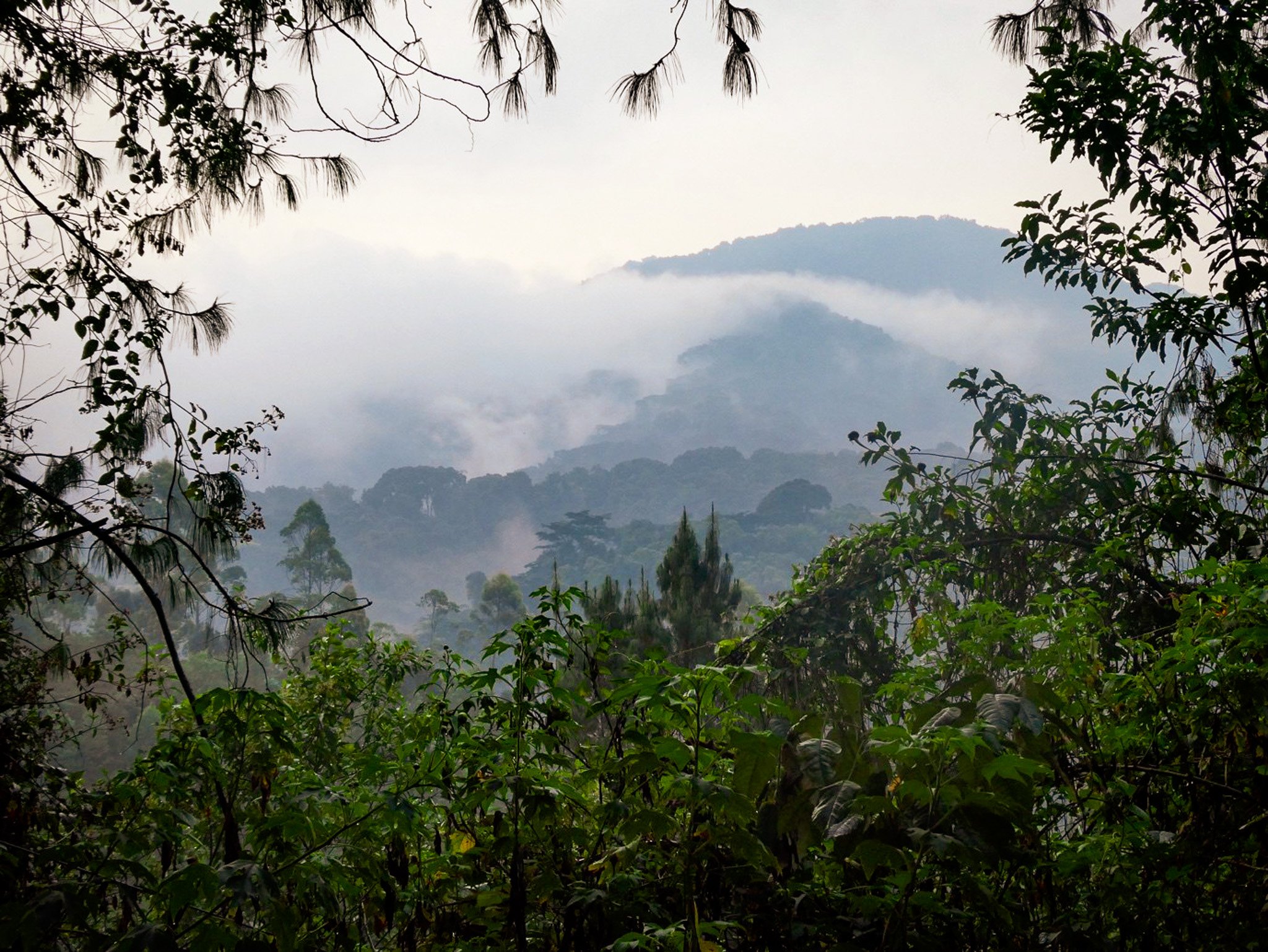
Bwindi Impenetrable Forest
The trip also allowed me to visit one of the International Tree Foundation’s projects on the ground. Our work here is closely related to protecting the Bwindi Impenetrable Forest where the mountain gorillas are, as well as supporting the livelihoods of local human communities. Bwindi was made into a national park in 1991 as a conservation initiative. While protecting the rainforest ecosystem and the endangered mountain gorilla population from poaching and habitat loss, it also dispossessed the forest dwelling Batwa people who lived there.
A cornerstone of the Batwa community project is the creation of a ‘pocket forest’ or mini replica of Bwindi, to give the Batwa access to traditional medicinal plants and commercial practices like bee keeping. It also gives our local partners the opportunity to learn from the Batwa by studying indigenous uses of the plants and their beneficial properties. Our project combines conservation with critical livelihood opportunities for a people who have been disenfranchised by their displacement.
Arriving in Kigali, Rwanda, I was driven to Rushaga across the border in Western Uganda. Rushaga is one of the main entry points to Bwindi Impenetrable National Park and the only one with access to the gorilla habituation experience.
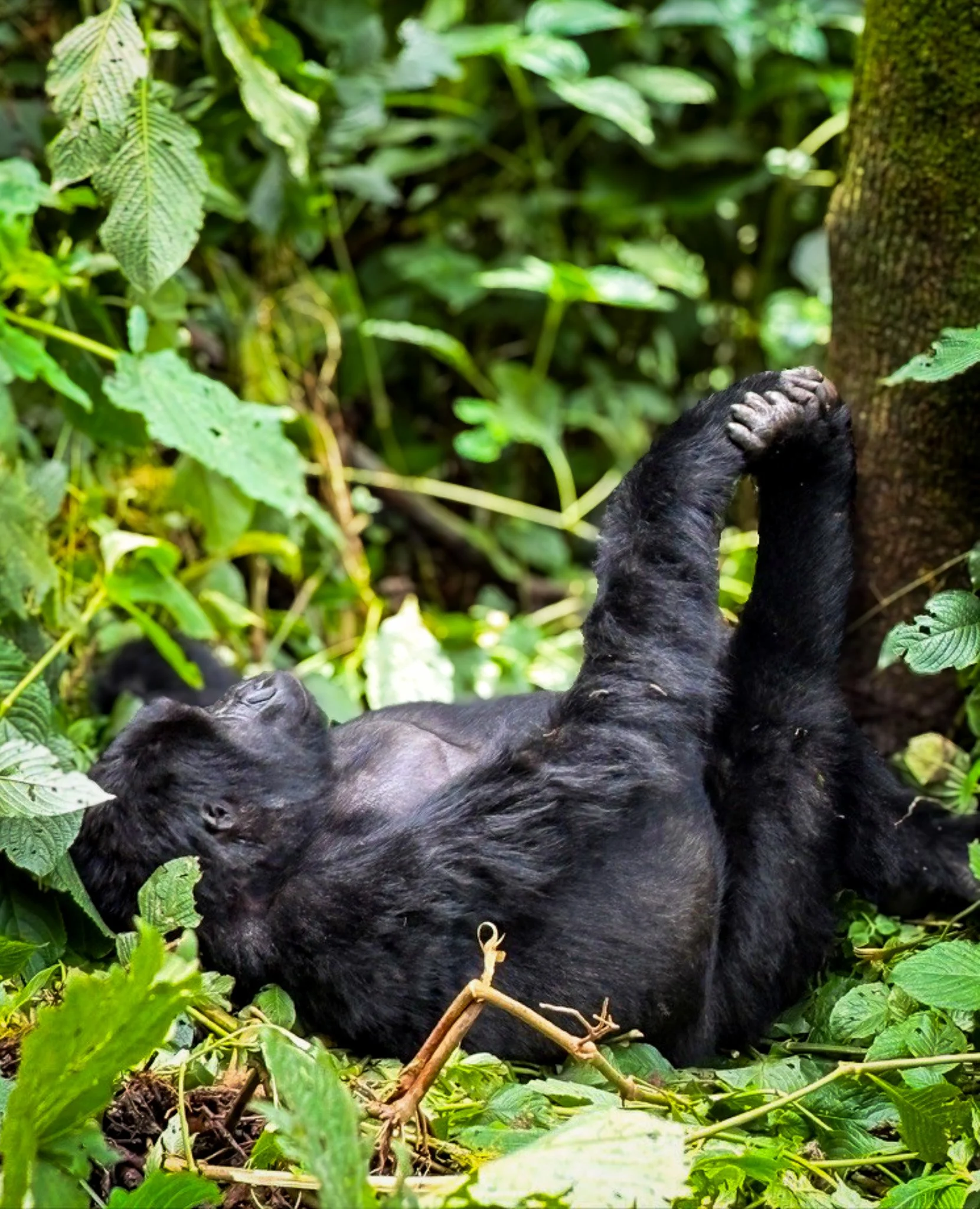
Siesta time
I spent four days in Rushaga, initially hiking in the forest with a guide for six and a half hours before spending a half day with the gorillas. We spent many hours sitting near them while they ate, which is what they spend most of the day doing. They eat up to twenty five kilos of vegetation per day. The group consisted of eleven gorillas, including two silverbacks and a female with a four day old baby and a naughty two year old. They seemed to accept our presence as though we were part of the ecosystem and would pass close to us as they looked for delicious shoots and leaves to eat.
The following day I met with Samuel Muhindo, ITF’s field officer in Uganda. Waiting to greet us in the office was an impressive gathering of people, including representatives of the Batwa community and some of our local partners. I was made to feel very welcome.
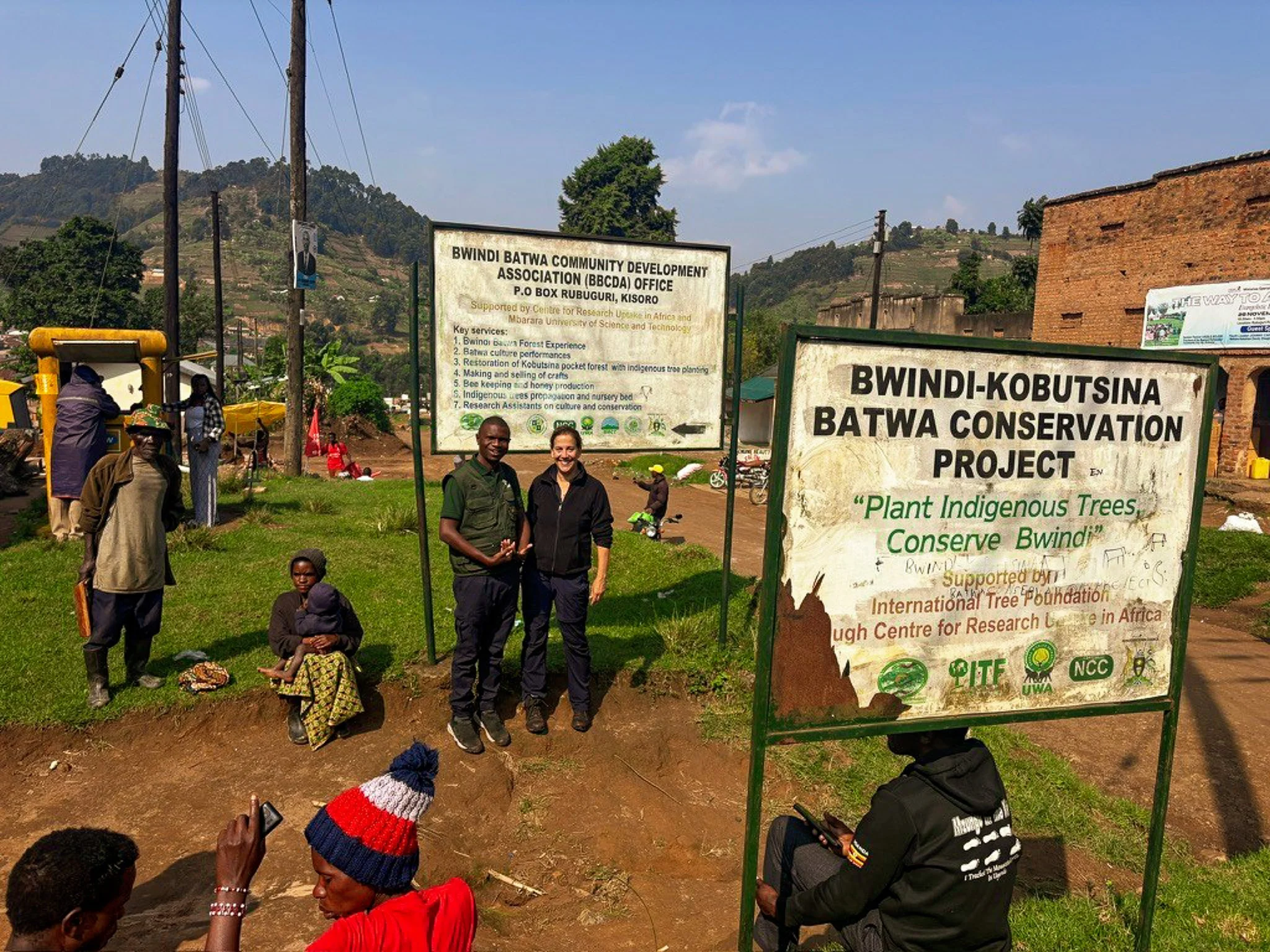
Andrea Lowndes with ITF’s Samuel Muhindo
It was heart-warming to meet members of the Batwa community who will benefit directly from our project. They proudly showed me the young trees flourishing within the pocket forest. These included the Prunus africana, reputed to help reduce prostate inflammation and improve urine flow in older men, the East African greenheart for coughs, malaria, stomach ailments and respiratory infections and Zanthoxylum mildbraedii, used in treating pain, fevers and stomach issues, as well as trees such as the Podocarpaceae used for landscaping and durable timber.
It is encouraging to see that the Batwa have embraced the initiative, both sharing their knowledge and traditional practices and continuing to develop new skills themselves. There are plans to keep on planting, to provide beehives as a source of livelihood and to create a small shop at the entrance to sell forest products and medicinal remedies.
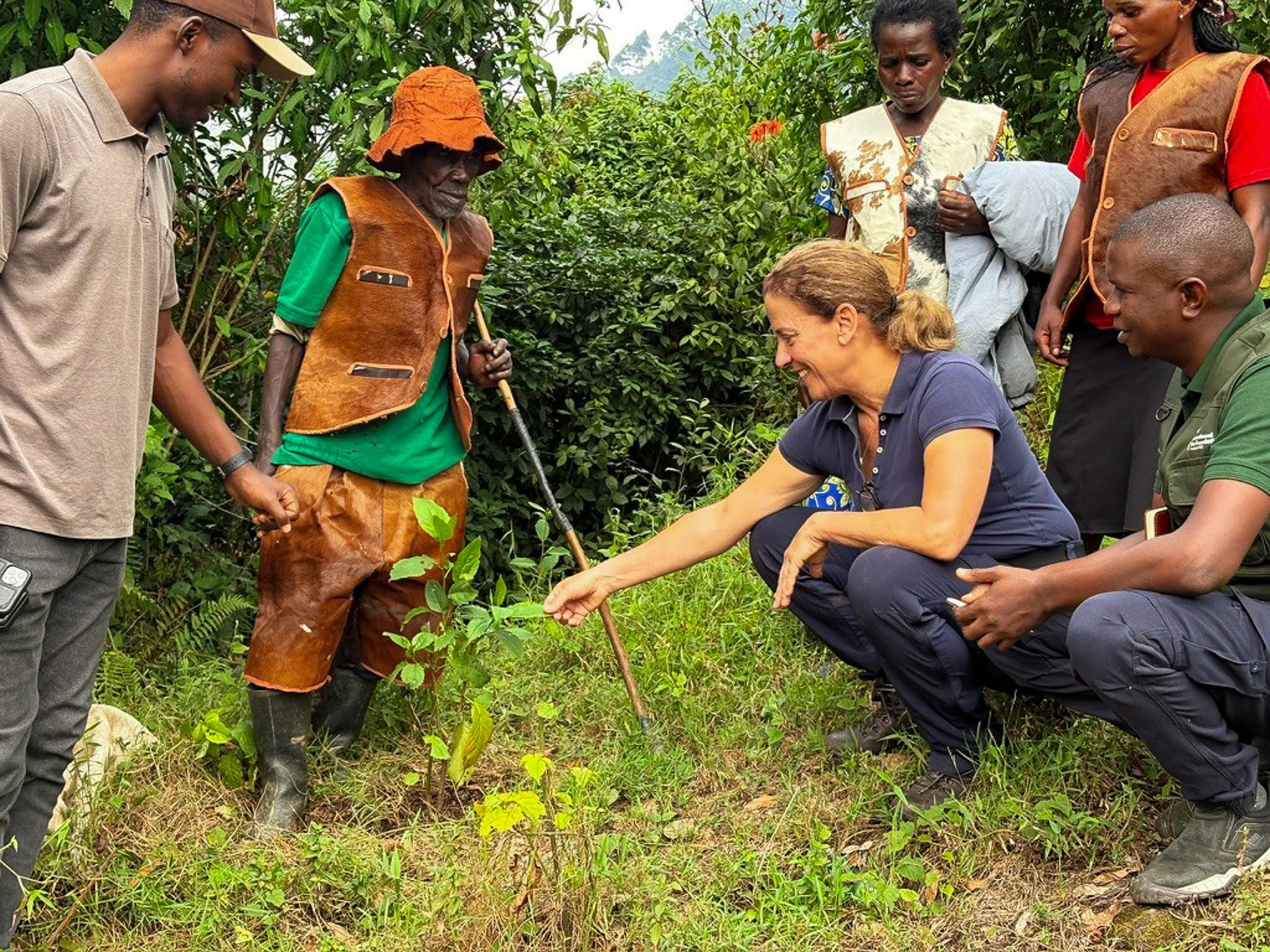
Visiting the pocket forest with the Batwa
We then visited a nearby area where trees planted along the riverbed to prevent erosion are flourishing. There is also a tree nursery with local seedlings, as well as some cash crops like avocados. Some of the cash crops were visibly suffering from the recent lack of rain and will be moved to an area closer to a water source.
As a trustee I feel proud of the work the International Tree Foundation does here. The field trip was highly informative and left me full of hope that Bwindi’s people and the gorillas in the mist will thrive alongside each other in the future. I look forward to returning one day to see how they are all doing.
Donate today
Help nature, people and wildlife thrive together in some of Africa’s most precious landscapes