
Restoring nature in the Ivry Cemetery, on the fringes of Paris
Benoît Gallot, now head curator at the celebrated Père-Lachaise Cemetery in Paris, pulls back the curtains on Ivry, another of the city’s famous cemeteries where he also worked. In this extract, Gallot describes how Ivry has become a refuge for flora and fauna thanks to the transformative effect of rewilding.
My first experience as a cemetery curator was at the Ivry Cemetery, just outside Paris. When I stepped into the role in 2010, I’d never been handed so much autonomy or responsibility. After taking some time to settle in, I gradually modified a number of internal procedures and set out to improve archive conservation. My team and I digitised all records and overhauled the system for organising concessions. It was nothing exciting, but I wanted to do right by my cemetery and manage it to the best of my ability.
To me, the cemetery’s natural elements were just a managerial headache. While its 1,900 trees were no doubt beautiful, all I saw were the piles of leaves the groundskeepers would have to rake and the complaints that might land on my desk as a result. And although I noticed the cemetery was home to a wide variety of birds, including what looked like parrots, I was primarily concerned with the droppings that littered the benches and tombstones. In those days, biodiversity was the least of my worries, and my environmental awareness was limited to recycling.
In 2011, Paris City Council passed a biodiversity plan calling on Parisian cemeteries to reduce their pesticide use. For decades, maintenance crews had sprayed walkways with weed killer whose stated goal was to destroy any wild plant that had the audacity to grow between gravestones. Each spring, the weeks-long crusade required workers to show up in full-body protective gear, and the treated sections had to be temporarily closed to the public. Only after the green areas had been sprayed with chemicals would they be deemed “clean”, i.e., lifeless. The result met user expectations and matched my own understanding of cemeteries, namely that everything surrounding the deceased should be dead, like them. Any trace of life was seen as a sign of disrespect. Flowers were allowed, but only if they were in planters. Even then, most were only used once a year, on All Saints’ Day, for the traditional chrysanthemums. Flowers had their place - as long as that place was on the headstones.
Naturally, the Cemetery’s grand avenues were lined with majestic trees and shrub beds. Greenery was not, however, encouraged to flourish inside the confines of its forty-seven divisions. Only one was designated as “landscaped”, meaning that a few trees and shrubs had been planted between the graves. It represented an acceptable level of disorder within a cemetery whose rows of graves were aligned with military precision. In other words, it was the touch of whimsy that proved we were open-minded and not overly rigid.
When it came time to enforce the new pesticide-free policy, my knee-jerk reaction was “Why are we doing this? We’ll be swamped with complaints. We’re a cemetery, not a park!” But my teams and I didn’t have a say in the matter, so we played along to placate our superiors and elected representatives. At their request, no chemicals would be used in three of the cemetery’s designated pesticide-free divisions. We didn’t realise it then, but a small revolution was taking root.
The transformation process took four years, during which time my attitude and that of my colleagues changed radically. As the years passed, more divisions were designated as pesticide-free. We received help from a consulting agency, purchased machinery and other equipment, trained groundskeepers in new maintenance techniques, seeded divisions that proved difficult to regreen, and brought in a landscaping company to gradually grass over the sidewalks.
Meanwhile, cemetery staff were so inspired that at the end of 2014, we made the decision to stop using pesticides across the entire seventy-acre site. What could explain such a radical shift? It was the green. The power of green. It goes without saying that green paths are prettier than dirt or gravel paths. Once we surrendered our chemicals, the cemetery began to change before our eyes, becoming an oasis of foliage bursting with natural beauty. The groundskeepers, whose work had always been considerably undervalued, also experienced a shift in their role. Up to that point, they had toiled thanklessly in the shadows. Nobody gave them a second thought unless there was a problem: if there were piles of leaves, dirty toilets, or overflowing trash cans, the groundskeepers weren’t doing their jobs. The pesticide-free policy thrust these workers into the limelight by giving them a chance to play up the site’s aesthetics. They gained visibility by trading in their weed killer for lawn mowers. Visitors began to admire the grounds in the wake of their efforts, and the groundskeepers started to take pride in their work. In the end, those four years taught us a beautiful lesson: how to balance respect for the dead with respect for life.
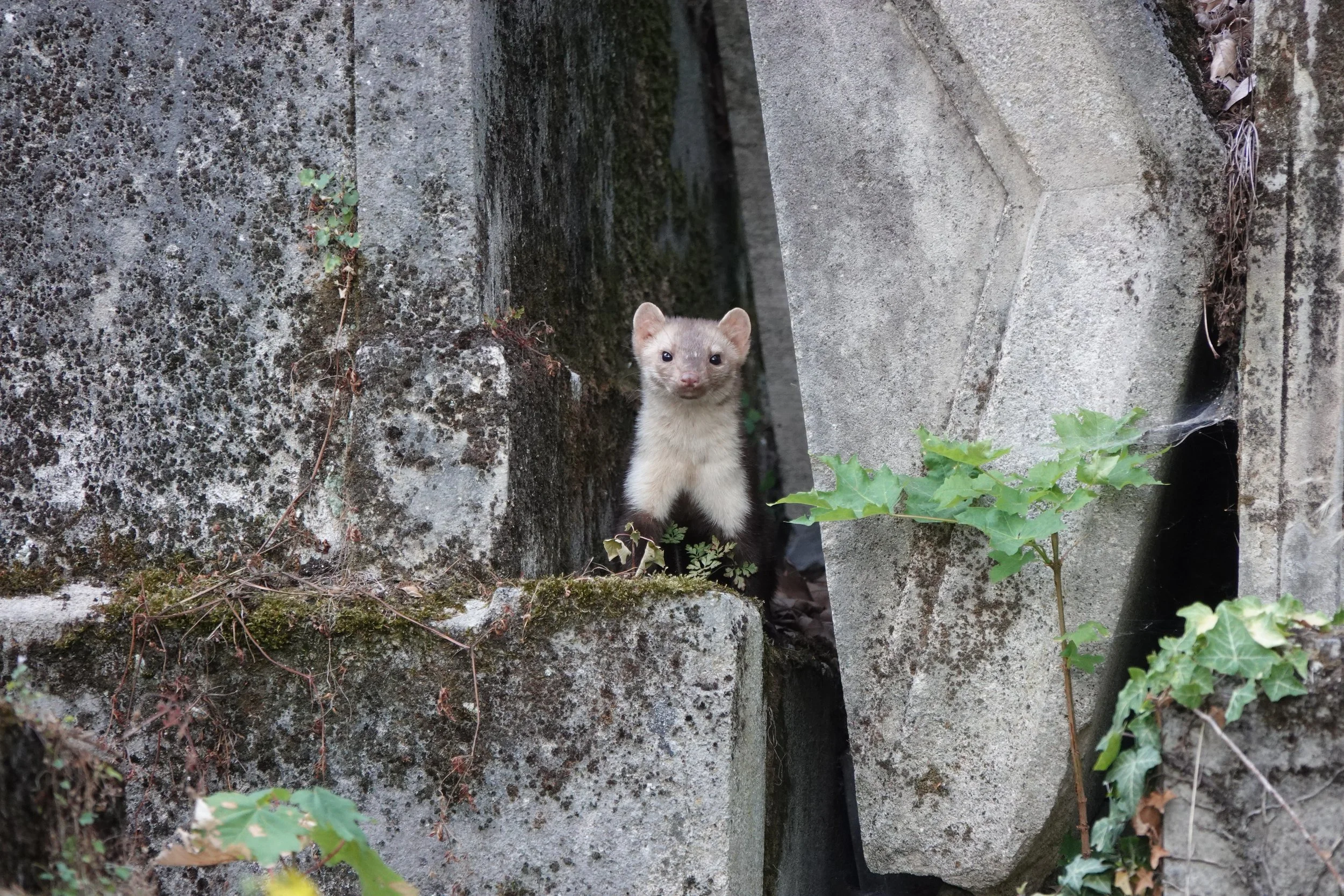
On a personal level, I credit the zero-pesticide policy with opening my eyes to the cemetery I managed. As the paths greened over, so did my attitude. I became fascinated by the rainbow of wildflowers: the deep-blue grape hyacinths, the bright-yellow lotus, the orange marigolds, and the lizard orchids that smelled strongly of goats. The cemetery began to feel more like the countryside, and I was increasingly aware of how lucky I was to exist inside this bubble of biodiversity wedged between the high-rises of the Parisian suburbs. As wildflowers proliferated, they attracted butterflies, bees, and other insects. A new ecosystem was emerging.
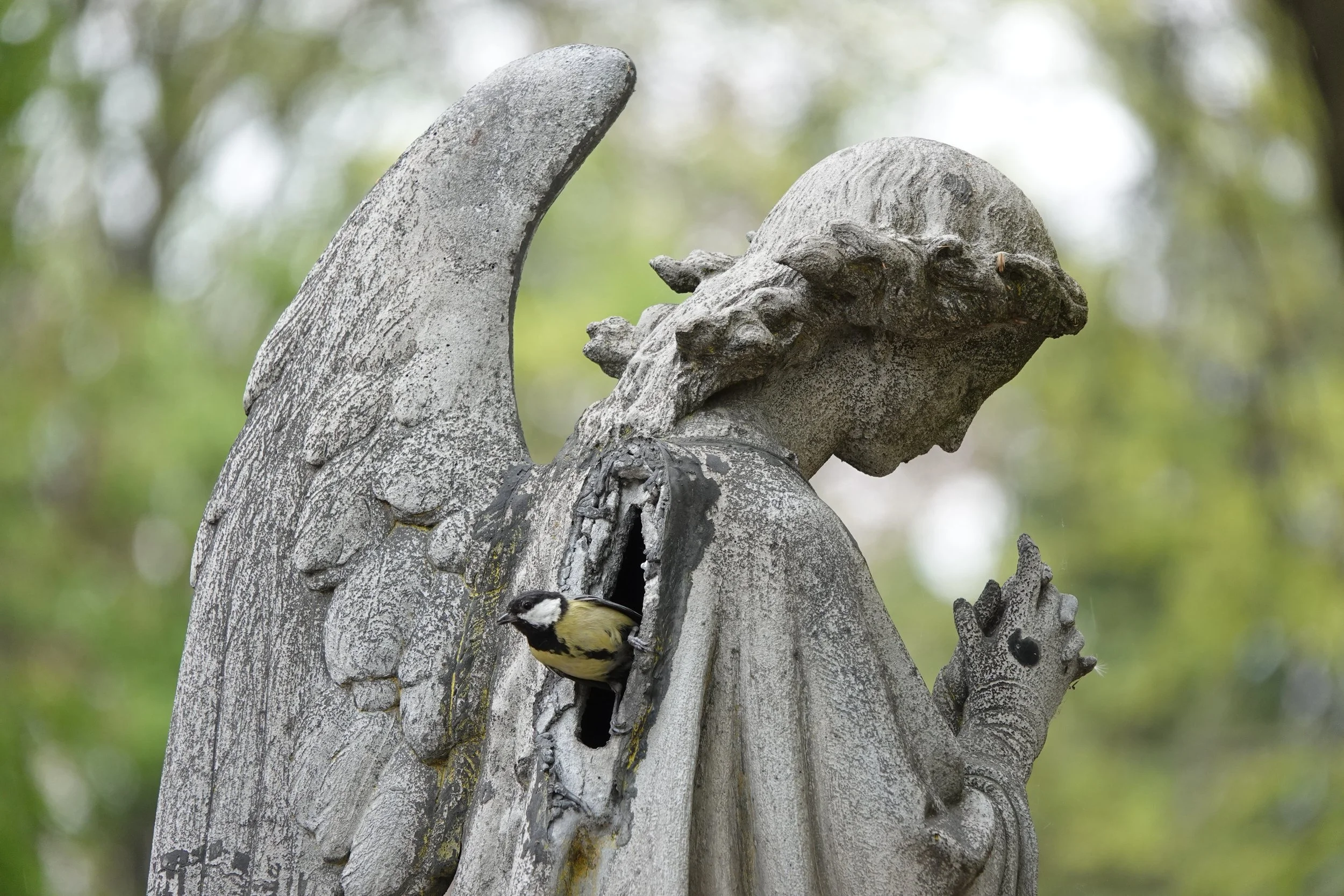
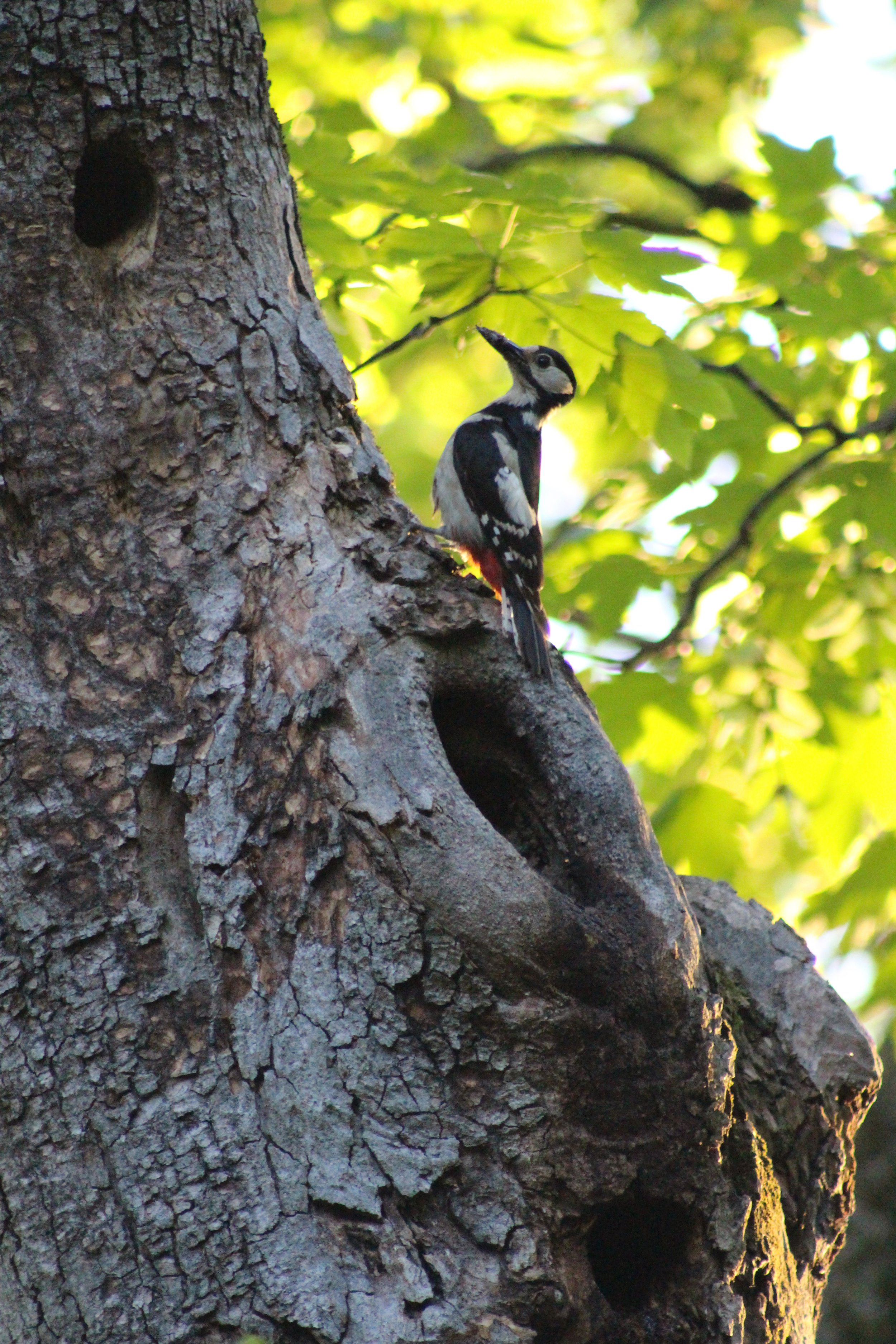
And yet, I lacked the knowledge to fully appreciate the transformation unfolding before my eyes. My field of expertise is the funeral industry; I didn’t know much about plants and animals. It was a chance encounter with Pierre, one of the cemetery’s regular birdwatchers who lived nearby, that changed my outlook forever. Our paths crossed one afternoon, and the amateur ornithologist took the time to explain his observations and what they meant for the area’s biodiversity. It dawned on me that the cemetery was home to an exceptional array of wildlife, and I wanted to learn more. From then on, whenever I walked the grounds I would look beyond the gravestones to watch titmice, starlings, blackbirds, ring-necked parakeets, woodpeckers, and other birds flitting from tree to tree.
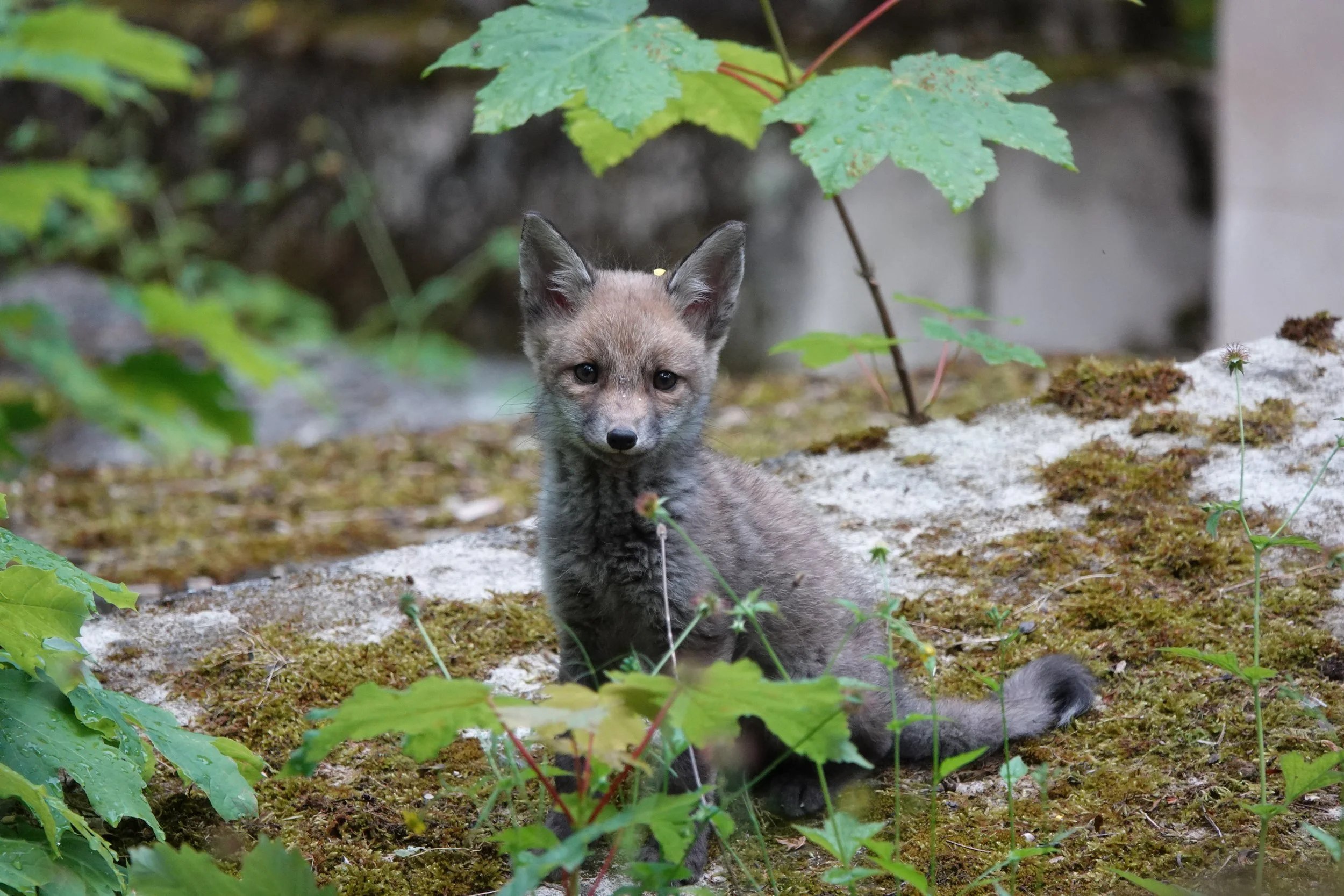
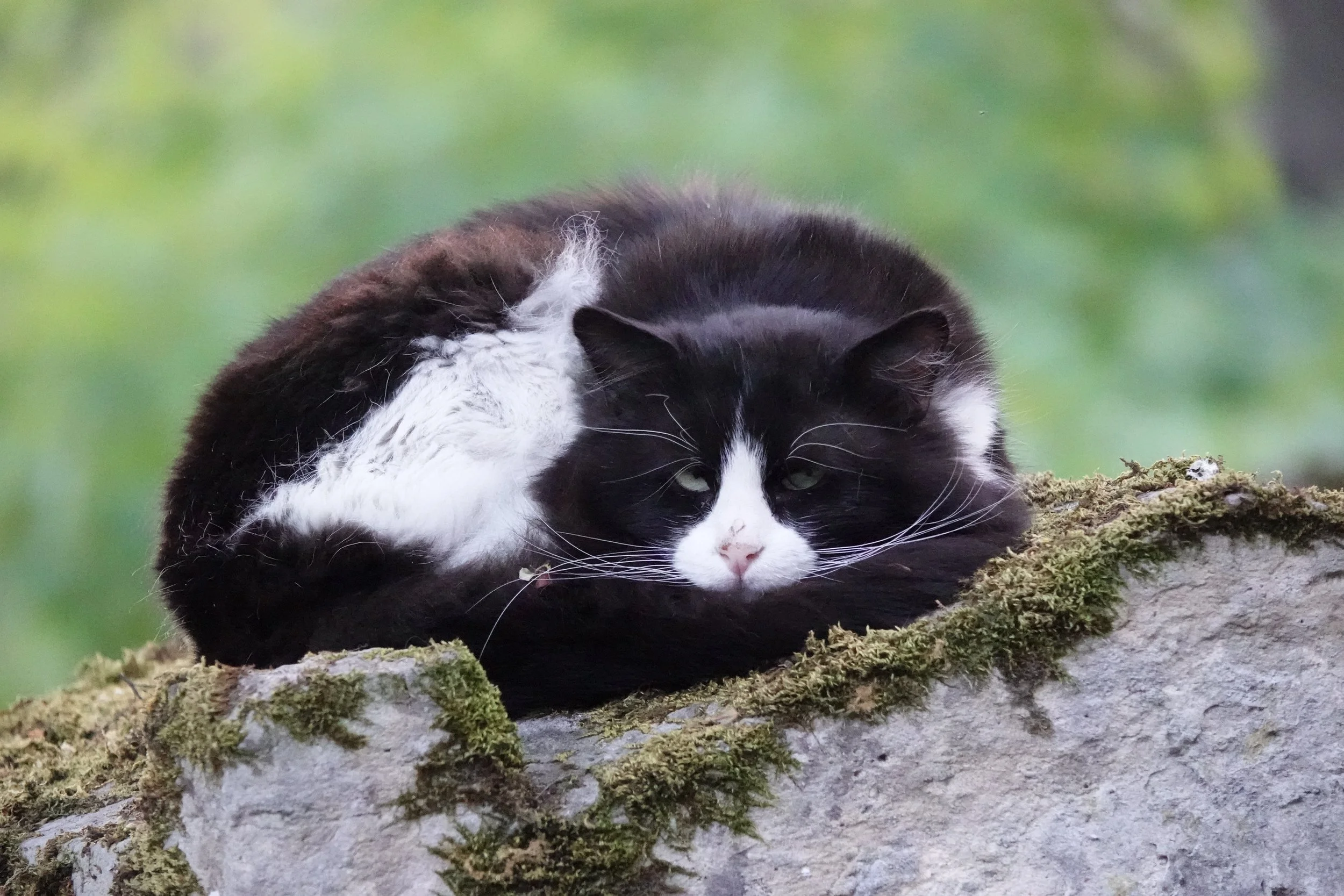
In 2017, to my great surprise, we were joined by a new group of playmates. After six years of transformation to promote biodiversity, a family of foxes took up residence in Ivry Cemetery. You can imagine our pride! We took their arrival as the reward for our efforts to make the cemetery a place not only for the dead but also for life. Suddenly, I found myself photographing foxes and their kits, hedgehogs, squirrels, and even tawny owls in my own backyard. I could scarcely believe it; although I’d grown up in the countryside, I was seeing more wild animals in the city than I ever had before. My pictures of wildlife began to pile up, and I found it hard to keep my newfound treasures to myself. I wanted to share them with other people and shed light on this aspect of the cemetery…. On June 3, 2017, @la_vie_au_cimetiere was born.
In early 2018, I learned that my colleague and fellow curator at the Montparnasse Cemetery had decided to retire. After spending eight years at Ivry, I felt ready to move on. I was itching to manage a cemetery within the city limits, one that presented the additional challenges of being a heritage and tourist site. Managing Montparnasse also meant managing its satellite cemeteries, including Passy, which may have the highest ratio of famous residents per square foot in the city. I applied for the job, hoping I’d get it. Unfortunately, my boss called in early April to tell me another of my colleagues had been chosen. “It’s a shame, but...” He went on to say that the curator of Père-Lachaise was planning to retire around the same time and that he wanted me to apply for the job.
I’m frequently asked how one becomes curator of Père Lachaise. I always reply, “By accident.” And yet, deep down, I’ve often wondered if it was my destiny. I’ve never believed that our fate is written in the stars; a life without surprises would be too sad. But I have to admit that, looking back, it does seem like an invisible hand gave me a nudge - two nudges, really - in the right direction.
With thanks to Greystone Books for this adapted extract from The Secret Life of A Cemetery by Benoît Gallot. This article first appeared in the 82nd Issue of ITF’s journal, Trees.