
The gifts that forests bring to humanity
In his new book, The Great Tree Story, the British explorer, author and photographer Levison Wood explores the profound influence forests have had on our planet and civilisation from their vital role in our past to their importance for our future.
Many old Japanese folk stories revolve around the kodama, a kind of spirit or deity that lives in the trees. People believed that kodama travel around the forest, retaining ancient knowledge that is passed down through the generations. If you cut down a tree that has a kodama living in it, you will be cursed.
“It is almost as if we are evolved to be in tune with the forest”
The most ancient and revered tree in Japan is the Jōmon Sugi, a large Cryptomeria, or Japanese cedar, on the southern island of Yakushima. Thick with moss, ferns and often shrouded in mist, the forest exudes a fairy-tale-like energy. Fittingly, this place was the inspiration for Hayao Miyazaki's anime film Princess Mononoke, which features the mythical kodama and the epic struggle between mankind and nature. The Jōmon Sugi is hollow at its centre and so it is impossible to date it accurately by counting the rings, but some scientists have suggested that it might be as much as 7,000 years old, which would make it the oldest singular living tree on Earth. While its age is in dispute, what is not is the importance that trees play in Japanese culture. Both of Japan's official religions, Shinto and Buddhism, believe that the forest is the realm of the divine. For Zen Buddhists, scripture is written in the landscape. The natural world itself is the word of god. In Shinto, the spirits are in the trees, in the rocks, in the wind and in the rivers.
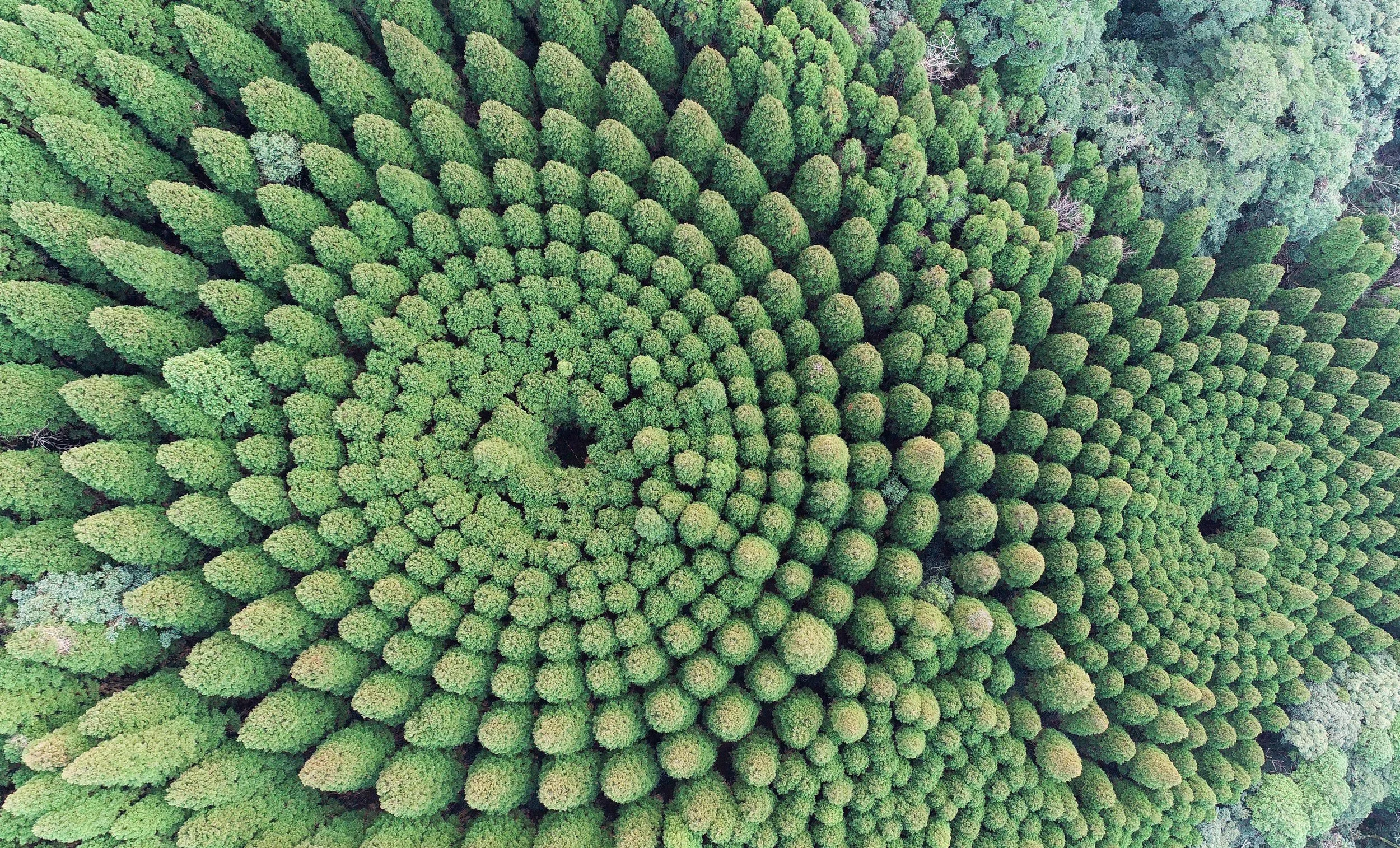
Nature is not separate from mankind as it is by Western definitions. The need to keep harmony between the two can be seen in every aspect of Japanese life, from the design of many homes to the affection given to gardens and bonsai trees.
Shizen, which translates as nature, is one of the seven principles of Zen aesthetics. It reminds us that we are all connected to nature spiritually and physically, and the more closely something relates to nature, the more beautiful it is. Japanese art often portrays natural scenes where trees, mountains or waves are the dominant subjects, and humans play a minor role.
The 1980s hailed an economic boom in Japan. In the opulence of the times, Tokyo businessmen were known to carry around gold flakes to sprinkle on their food and in their drinks. Money was fast and fluid. It seems apt that also at this time, a concept developed that was a counterbalance to the capitalist frenzy, a panacea to the stress, speed, overwork and anxiety of everyday life.
In 1982, in a nod to traditional Shinto and Buddhist practices that revere nature, Tomohide Akiyama, the director of the Japanese Ministry of Agriculture, coined the term shinrin-yoku, or 'forest bathing'. This practice of forest immersion is an invitation to heal through nature. Participants disconnect from modern devices and remove other distractions to reset within the therapeutic forest environment.
“It would be terribly sad if we were to say we were the last generation that played in the woods”
With this new field of study, the government started to test whether the forest environment had positive effects on blood pressure, heart rate, cortisol levels and immune system responses. Evidence came back supporting what was intuitively suspected. In one study, subjects were exposed to three scents commonly found in Japanese woods - cedar, hiba oil and Taiwan cypress - and all the participants experienced stimulated activity in the prefrontal cortex of their brains, which allowed for increased focus and concentration and a greater degree of relaxation.
The source of these benefits has been traced to the volatile secondary compound phytoncide, which trees and other plants emit when repelling insects and other predatory organisms. Why humans should be stimulated by this is still unknown. But forest bathing works.
Dr Qing Li of the Nippon Medical School in Tokyo describes forest bathing as 'simply being in nature, connecting with it through our sense of sight, hearing, taste, smell and touch...when we open up our senses, we begin to connect with the natural world."

He cites other proven benefits too, including: reduced blood pressure, increased NK cells, reduced stress hormones and a balanced autonomic nervous system, as well as reduced anxiety, improved sleep, a counter to depression and even the release of anti-cancer proteins. It is almost as if we are evolved to be in tune with the forest.
With nearly half the adult UK population taking one form or another of prescribed medications, and around a quarter taking more than one medication, forest therapy offers an alternative to our struggling immune systems. According to the US Environmental Protection Agency, the average American spends 93 per cent of their time indoors. Europeans are not that much better. We spend between six and ten hours a day glued to our computer and phone screens - addicted to technology and the dopamine rushes that social media encourages.
With so many benefits, it seemed remiss not to try. The first trial system for the forest-bathing practice was created in Akasawa, in Nagano prefecture. In the 1990s a series of government-sponsored 'Shinrin-yoku Trails' were established, to support citizens actively to participate in this healing. Now there are 65 such trails in Japan, each with self-guided programmes for forest immersion, as well as forest therapy guides.
“Forests harbour a treasure trove of plant species with potent medicinal properties, offering natural remedies for a myriad of illnesses”
The Indian poet, writer, philosopher and social reformer Rabignath Tagore (1861-1941) also agreed with this vision. He held firmly to the idea that learning should be done outside, in nature, and in the schools he founded, classes were mainly conducted under the shade of trees. It would be terribly sad if we were to say we were the last generation that played in the woods.
Forests have given humanity another great gift: phytotherapy, the use of plants for medicinal purposes, arguably the most ancient form of medicine. Forests harbour a treasure trove of plant species with potent medicinal properties, offering natural remedies for a myriad of illnesses. The bark of the Pacific yew tree, found in North American forests, yields compounds used in chemotherapy drugs to treat cancer. Similarly, the rosy periwinkle (Catharanthus roseus), endemic to Madagascar's rainforests, is the source of vinblastine and vincristine - essential chemotherapeutic agents used in the treatment of childhood leukaemia and Hodgkin's disease.
However, out of the approximately 50,000 known medicinal plant species, which serve as the foundation for over 50 per cent of all modern medications, up to a fifth are under threat of extinction at various levels - local, national, regional, or global - due to deforestation. And yet, our knowledge about potential drugs that can be extracted from rainforests remains in its infancy.
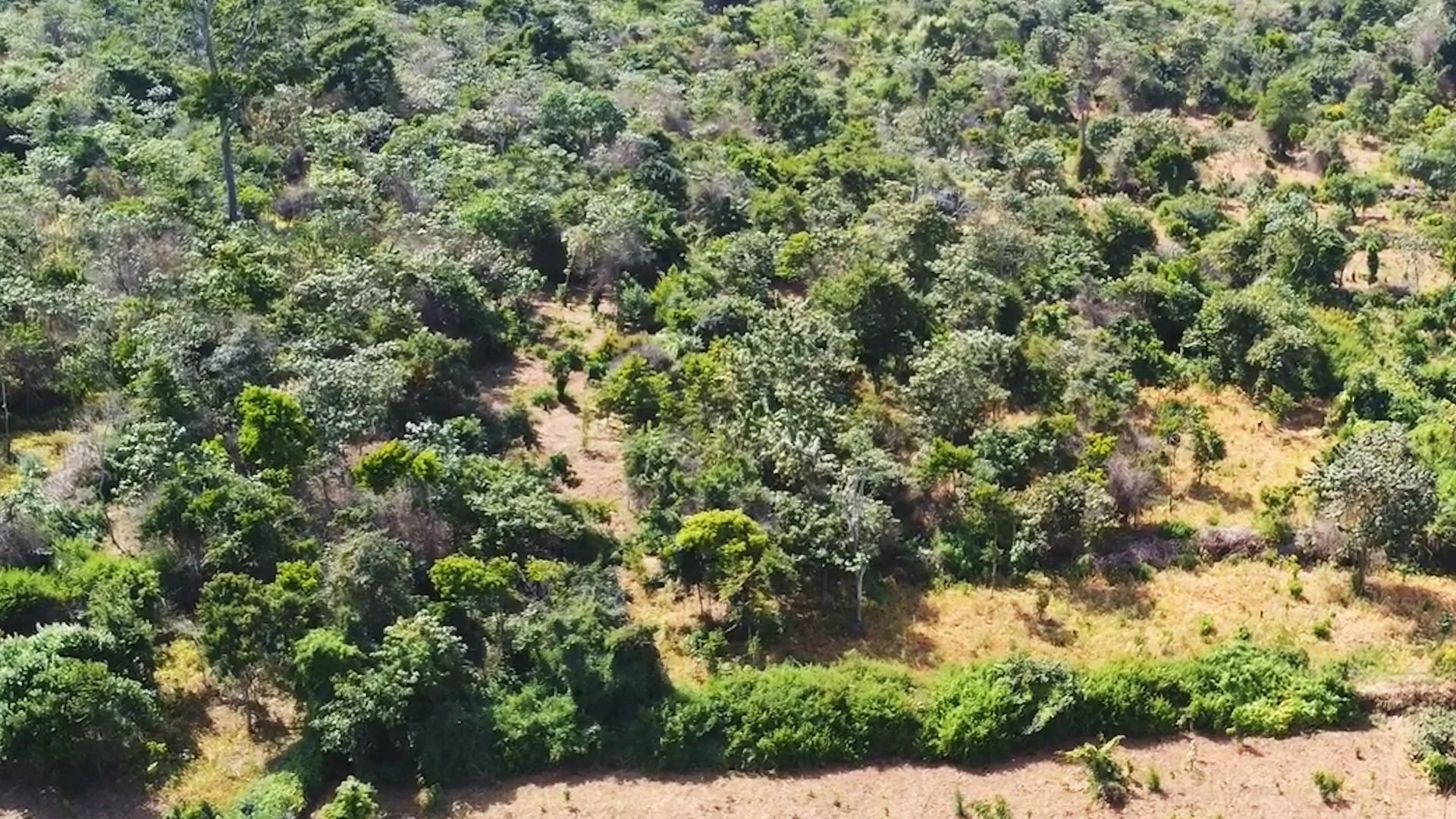
Knowledge of these medicines is the legacy of generations of indigenous communities using the forest as their pharmacy. When we destroy forests, we run the risk of not only species endangerment and extinction, but the obliteration of medicines we have yet to identify. Possible remedies for cancer, heart disease and diabetes are growing amid the trees, just waiting for our senses to grow sharper. Not only this, but it is estimated that around 80 per cent of the world's population living in the developing world relies on traditional plant-based medicine for primary healthcare.
Humans have long relied on the vast array of botanical resources to treat ailments ranging from infections to chronic diseases. Willow bark has been used throughout the centuries in China and Europe, and continues to be used today for the treatment of pain (particularly low back pain), headache, fever, flu, muscle pain and inflammatory conditions, such as tendinitis. The property within the bark responsible for pain relief and fever reduction is a chemical called salicin, which acts like aspirin.
Moreover, forests play a crucial role in mitigating the spread of infectious diseases. Research has shown that intact forests serve as buffers against zoonotic diseases, which are illnesses transmitted between animals and humans. Deforestation disrupts these natural barriers, increasing the risk of disease transmission from wildlife to humans. The loss of forest cover has been linked to outbreaks of diseases such as Ebola and Zika virus.
“Out of the approximately 50,000 known medicinal plant species, which serve as the foundation for over 50 per cent of all modern medications, up to a fifth are under threat of extinction”
Deforesting our medical cabinet, and the home of the indigenous communities who hold much of this traditional plant knowledge, is shooting ourselves in the foot. Potential medicines are underneath the forest canopy, waiting for us to take notice. However, the commercialisation of traditional medicines can also lead to overexploitation of natural resources in the region, as big pharma attempts to take a slice of the pie.
In the face of such existential battles, indigenous communities continue to demonstrate inspirational resilience. Threatened with dispossession and cultural elimination, these groups have been forced to find new and innovative ways to preserve their languages, spiritual practices and traditional knowledge, having to adapt and shrink into secret or underground settings. The perseverance of these cultures is a testament to the spirit of indigenous determination to keep the wisdom of the forest alive.
It is a story of survival against adversity that calls for acknowledgment, restitution and solidarity with indigenous peoples from across the continents, as they continue to assert their rights. Indigenous leaders and activists elevate the voices of their ancestors and communities in their quest to reclaim their fundamental right of custody over their lands and the space to nurture their cultures.
The goal of indigenous equity both legally and culturally has a place as an intrinsic pillar in the fight against the numerous environmental and cultural crises facing global society today. Since the dawn of modern science, indigenous knowledge has often been beaten down into second place, but it is time to realise that new is not always best. There is a lot we can learn from those who have not forgotten the old ways. The time is now, as we stand at this critical juncture in human history, to use every tool in our box to save Earth's forests, and in doing so, save ourselves.
With thanks to Octopus Books for this extract from The Great Tree Story. This article first appeared in the 82nd Issue of ITF’s journal, Trees.